Wednesday, January 22, 2014

Persuade the Bystanders

This post has to do with social justice – you know, topics like privilege, racism, sexism, classism, ablism, and all the other ignorant and/or hatey "isms" worth railing against. I'll get to those in a second.

In the early 90s, while arguing politics on BBS message boards, I realized an important truth that I've carried with me always:

When people argue in public, they will almost never convince one another. But they do influence the lurkers. 

WWIV message boards
My view of the world when I
learned this important life lesson 
Sometimes the persuasion is instant. Now and then a lurker will timidly post and reveal that their minds have been changed. But most keep this fact to themselves. More often, the change is slow. These lurkers continue to follow similar arguments, until eventually, they are swayed by whichever side has collectively made the best case. I myself have drastically changed my mind on deeply held beliefs in this way, both by debating and merely watching debates. I've also seen it happen to other people. But it's rarely instant.

It's hard to know that these neutral and persuadable lurkers exist. They are, by their nature, quiet. Very often, though not always, the more vocal a person is, the less likely they are to be convinced. So we tend to think everyone who doesn't use a megaphone is just like everyone who does. This is not true.

I think about the topic of persuasion alot. I'm a writer. It's my job to persuade. I also love debate, a casual pastime since childhood. Roland makes a wonderful and challenging debate partner to help me better understand what works and what doesn't. On top of all that, I've studied mind control, otherwise known as "coercive persuasion" – the ability of manipulators to convince people against their will.

I've learned about why people believe things, and what factors make people change their minds, and why people sometimes never will, even in the face of overwhelming evidence. Cognitive Dissonance is the mechanism we all employ to either accept or reject new ideas. It can be a very powerful barrier to persuading others that our position is correct. Cognitive dissonance is the source of all closed minds. There are ways around it – both ethical and unethical. I am more concerned with ethical persuasion.

I consider myself an activist. Anyone who publicly advocates for social justice, is, in my opinion, an activist. I am a woman and I have what some might call an invisible disability. In all other areas, I am privileged, but I consider myself an ally against racism and other hateful thought systems. I firmly believe that everyone has a different life experience, and it is generally best to never dismiss anyone's position out of hand until I've done my utmost to understand – even if I don't agree.

Social media has opened a new door for activists. It allows the voices of oppressed individuals and classes be heard by all kinds of people who were previously isolated. The internet democratizes the population by giving everyone a printing press and a megaphone. It's a beautiful thing. And every activist, whether they know it or not, is in a position to persuade.
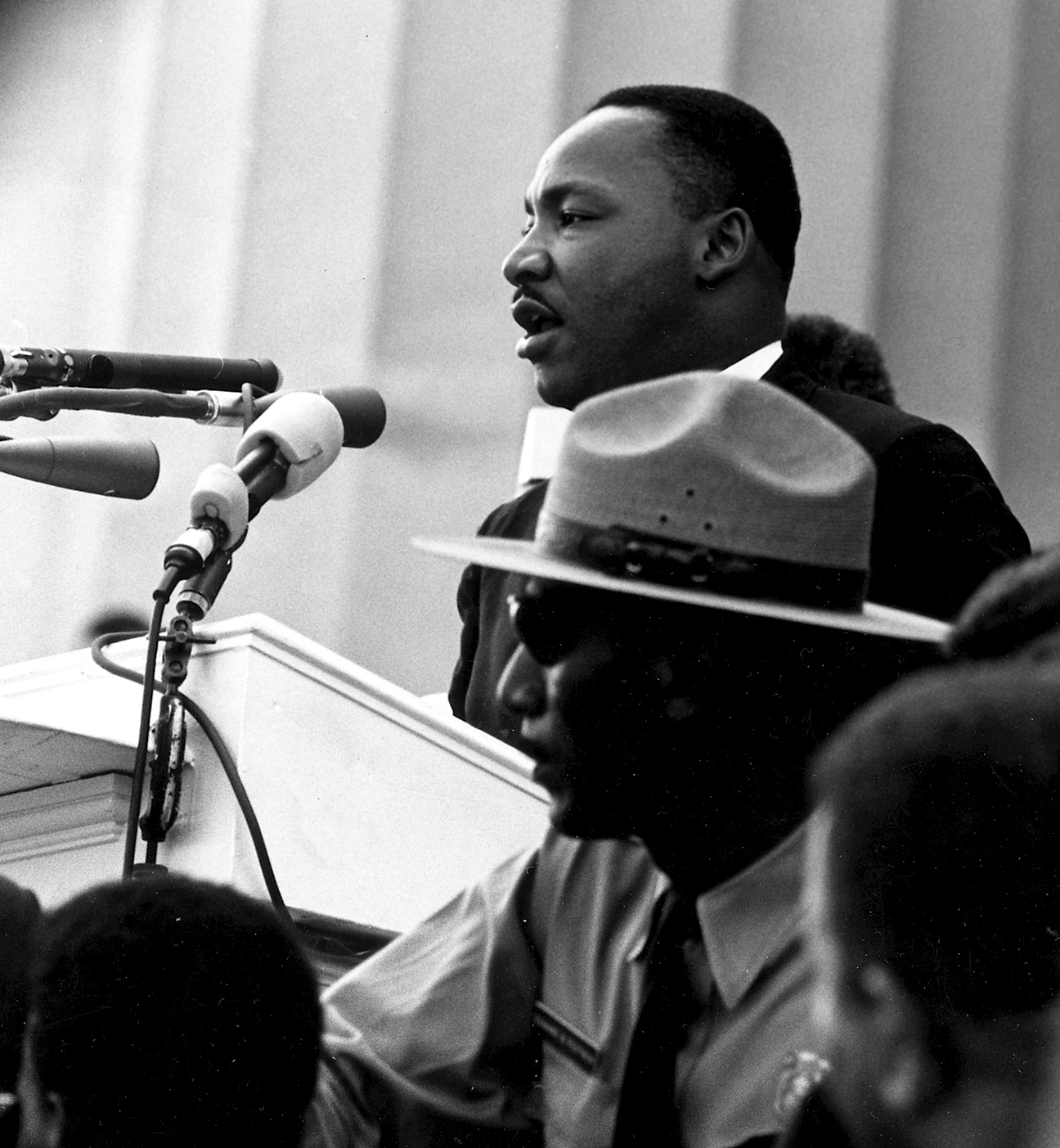
This guy is just like you. Everyone is listening.
Choose well what you will say.
Presumably, our goal is to make society better. To reduce hate. To eliminate ignorance. To eliminate unfairness. To prevent harm and prosecute those who hurt others. To pass laws that create the most equal playing fields for all people. Everyone should have the same opportunities for success, regardless of outward differences that so many in our society tend to get hung up on. I want everyone to be treated with respect, even if they're a different color, or gender, or disabled, or attracted to the same gender, or all the other things I've failed to list here.

In a democracy, the best way to accomplish all of those goals is to be persuasive. Activism, when done right, is persuasive. Anything else is just preaching to the choir – it feels good, but nothing gets done.

Given that, there are certain trends I see among activists that disturb me for two reasons:

  1. I don't consider these methods ethical. 
  2. These methods are not persuasive.

The Outrage Machine is constantly producing new horrors to raise outrage. Sometimes I believe this machine is persuasive, and other times I don't. Sometimes I think it is counter-persuasive. And that concerns me. Because I'd like to see society improve. I'd like to employ the best tactics.

So when I apply my mind to social justice activism, the question often is, "How could this message be more convincing? How can it reach more people and change minds?" Sometimes, I speak up about tactics. And when I do, my views are controversial, often because they're mistaken for taking up the other side's position, or being an apologetic, or dismissing someone's views, or perhaps not being enough of a cheerleader for our side, nor supportive enough of the cheerleaders we have.

None of those are my goals. I'm not dismissing anyone. I am not being an apologist for the other side. I am not defending horrible behavior. I am merely goal-oriented and thinking about the best ways to achieve the goals that all online social justice activists share – more fairness and equality and tolerance for all.

So here's my controversial statement of the day, and I hope you'll hear me out. Allow me to persuade you before immediately dismissing my argument. Please know I understand the counter-arguments and have given this alot of thought.

I've seen a certain sentiment echoed via Twitter and the blogosphere, usually coming from an underprivileged person directed at a privileged person (i.e. woman or POC or disabled or trans* directed at a man or white person or cis), and it goes something like: "It's not my job to educate you!" It is often delivered in an angry or dismissive or antagonistic tone.

In terms of accomplishing the above goals, it is entirely counterproductive.

Yes, I do understand where this sentiment comes from. Especially when, say, a feminist of color has been asked 50,000 times by hostile racist misogynists to explain why she's so upset, and she's given the answer 49,999 times, and she's being asked to speak for her entire race and sex to flaming assholes who aren't listening anyway. Her anger is entirely justified. As is her weariness in the face of this seemingly Sisyphean task. It is true, in fact, that Google is just a fingertip away, and all ignorance about any topic can be quickly dissolved like salt in water.

The endless questions themselves can be a rhetoric tool used to dismiss, belittle, and aggravate. So why waste even two seconds talking to those jerks?

I get all that, I really do. 

And I understand the double-bind. As a woman, I can choose to be labeled a bitch, or let people walk all over me. I am not allowed a middle ground. Similar thought-terminating cliches are employed to double-bind people of all other oppressed classes. I am not suggesting the answer is passivity and eternal politeness, bowing and scraping. Far from it.

And most especially, I understand that most oppressed people have no interest in activism and just want to live their lives without being bothered. They just want to be accepted as average and normal and don't want to go around thinking about their orientation, disability, or skin color. They just want to live. In this latter case, I think the "It's not my job" answer is most appropriate – it isn't your job.

But as activists and advocates, you actually have taken on the job. Maybe you only want it to be part time, but it's your job. By speaking up, you volunteered. It's a tough job, but worth doing.

No, it's not your job to educate the hostile instigator of controversy or the timeline troll who is just trying to raise everyone's hackles. That guy will never be convinced by anything you have to say. It's true. He is so enmired in his beliefs and has made public declarations of it, so his cognitive dissonance is nearly impenetrable. It is likely that when the world changes completely into a social utopia dreamworld, he will go to his grave willfully ignorant and hating.

Alas, educational and persuasive words are not meant for him. Your efforts are meant for the bystanders, the dozens, or hundreds, or even thousands of quiet lurkers. They're out there, neutral, or ignorant, or perhaps a bit racist or a bit sexist or any other *ist, but they don't feel too strongly about it. Not enough to join the argument. But they're curious, and they're watching each player make a case.

Pretend today the Outrage Machine has identified a new controversy and brought it to the rapt attention of the information-obsessed internet. Someone gets wrongly fired from a job, or groped at a con, or catcalled, or outed, or harassed, or murdered. Some person in power says something stupid, and advocates reply, and anti-advocates reply back and everyone's in an uproar for a few days. This is the chance to convince that silent neutral ignorant majority. They are all near the fence. They think sexism is over, or transwomen are just confused, or bisexuals don't exist, or Muslims are more protected than Christians, or any black kid has it coming because no one gets shot unless they deserve it, or whatever ignorant thing they believe. This is the chance of advocates to convince those bystanders.

I believed many of those things once. And over time, effective arguments finally got to me. Advocates finally educated me. And not usually because I sought the information out on my own. Usually because people kept pointing me in the right direction.

That's the point of publicity. You hold a megaphone, just for a few minutes. You've gotten someone's attention. In this age of the information firehose, that's the hard part. Now how are you going to most effectively use it?

Even the small-time advocate who doesn't have a big platform, who rarely says much of anything, has a huge opportunity to convince these silent types, because their followers are their friends and family. We are much more influential to those who know us and like us personally. Yes, those Facebook debates are frustrating, because no one seems to listen, but the silent readers are paying attention.

This is how the most recent victories in marriage equality were won. A majority of the mainstream public was swayed, not through anger and righteous indignation, but through family members who came out of the closet and stood gentle yet firm on their rights to be gay and to love and commit to who they wanted. Eventually, few loving family members could imagine a world where government would bar their happy union.

Injustices happen every moment of every day. Outrage can spark quite an inflagration of justifiable anger that sadly, too often, turns to hostility, or ostracism, or shaming, or personal attacks, or blatant logical fallacies. And when this happens, you've lost the moral high-ground. You have ceased being persuasive to that silent, neutral, convincible audience. And then it doesn't matter how right you are. Because anyone who might have been listening will turn against your position. The opponent wins an easy victory. Score one for the trolls.

Even more tragic and destructive is when misdirected anger scares away fellow advocates and allies – even those in the same category as you (fellow women, POCs, LGBTs, etc). These are people who are already convinced of your position and want to help. They observe this open hostility and feel judged or lumped in with the haters because of a slight variance in opinion. They may already be marginalized by being themselves in the oppressed class, and now they feel marginalized further by activists who claim to be advocating on their behalf. They may become terrified to say anything, lest it be the wrong thing, lest your irate gaze turn instead on them. Intersectional individuals are even more at risk for this type of dismissal and marginalization.

I myself have been in this position amongst my fellow feminists, sometimes for defending intersectional classes (like advocating trans rights to rad fems), and sometimes because my opinion on tactics differed. (I'm generally against boycotts, for instance.) I'm fine with people disagreeing with me, but I've also been actively shamed for holding these and other stances. Shaming, threatened ostracization, and personal attacks go too far.

This type of hostility makes it frightening for fellow advocates to contribute to the discussion. For instance, it made me hesitant to write this post. Thankfully, I'm the type of person who doesn't like to be silenced in the face of fear. Others are understandably more timid.

We need more diversity among our voices, not less. And more tolerance. Don't we believe that both diversity and tolerance lead to a better world? We need all the allies and advocates we can get, waving the banner, even if some choose to wave it differently than you. Punch upward, at the system, at the oppressors, at the powerful, at the bad guys. Don't punch sideways at the ally standing next to you just because she's easier to hit.

Oppressed people have much to be angry about, and I would never rob them of their anger. Anger is a valuable emotion. It motivates and feeds energy into individuals and groups and causes. I am not advocating for less anger – I am suggesting that those energies be channeled persuasively to produce the most positive outcomes.

(And in the moment of offense, especially when there is no audience, untamed anger very much has its place in defending individuals against in-progress assault or insult. I am not suggesting passivity or politeness when rights need to be asserted to a hostile *ist who insults and then demands to know why it was insulting. Since you likely will never convince him, that's the time to growl and spit, to say it's not your job, and to gently or not-so-gently direct him to Google. Or not. Depends on you and the situation.)

Updated to add: Sally Kohn puts it another way in her TED talk, "Let's Try Emotional Correctness".


And Mattie Brice recently wrote about anger in protesting the video games industry, suggesting we put behind us the demeaning hostility in 2013.

It's true that maintaining the moral high-ground can be exhausting. We can't do it all the time. Sometimes I tweet or blog my opinions. Sometimes I advocate. Sometimes I give the long answer.

And other times, I'm busy, I just direct people to others who have written more eloquently than I. Think about it: If, instead of saying, "Correcting your ignorance is not my responsibility," you suggest a well-known educational website or blog post on the topic, like Unpacking the Invisible Knapsack. You not only give that hostile person a chance at graceful, face-saving redemption, but more importantly, it's another opportunity to distribute that content to every single one of your other followers, many whom may have missed that particular blog post, or have never been exposed to content that you think is obvious because you read it a decade ago.

There is much to be said for "brand awareness", a tactic commercial marketers understand well. Every chance you have to retweet the same link to yet another person asking the same questions, your other followers will begin to see that content as legitimate and worth consuming. Maybe they meant to read it last month, and have forgotten. You're making it easy for them to educate themselves and maybe even join the cause.

Other times, the good fight becomes overwhelming. It's exhausting to be outraged all the time. That's when I take a break and let others pick up the banner. Sometimes I do this because I am far too emotional to think clearly. I'd rather sit out the Outrage Machine's churning than say something that loses points for my side. Because I want my team to win. It is possible to communicate "It's not my job" in a way that doesn't detract from the overall argument or your future ability to be persuasive. Like, "I don't have time to answer that right now. Could you please google 'cis privilege' on your own?" Or just remain silent. That gives the hostile troll the last word, but most likely, it will reflect worse on him than you.

It's true that my white, cis, thin, mostly-abled, * privilege gives me the luxury to sit alot of these out, a privilege not everyone may have. I realize that I live relatively free from various kinds of hostility that lets me take these breaks. It's a little easier for me, perhaps, to go on an anger diet, to step away from the keyboard when emotions run too high. In many ways, this might be "easy for me to say". I still think these suggestions are tactically the most effective, and worth employing whenever possible.

In the end, we all have our own journey and our own idea of what's right and wrong. It's your social media platform, so please, do with it what you will. But hopefully, I've been just a bit persuasive here.

Let's go out and change the world.

Labels: , , , , , , , , , , , , , ,

Wednesday, December 26, 2012

Les Misérables and Ayn Rand

I delight in finding flaws in Ayn Rand's reasoning using the tools of logic she promoted. This isn't because I hate Ayn Rand; to the contrary, she has been highly influential and I respect her greatly.

Just as she did, I enjoy battling contradiction where ever I find it. Rand herself said, in the (in)famous John Galt speech of Atlas Shrugged, "To arrive at a contradiction is to confess an error in one’s thinking; to maintain a contradiction is to abdicate one’s mind and to evict oneself from the realm of reality." This woman who espoused individual thinking and death to dogma created perhaps one of the greatest contradictions -- followers who question not a word she spoke, who thirty years after her expiration date continue to walk in lock step and exile anyone who dares question or have an original idea.

Perhaps it is also because I have the heart of a hacker that I love to poke. Rand's philosophy, Objectivism, is a complex yet elegant machine, so self-assured of its own function, wholeness, and security, that I cannot resist breaking it apart whenever I can. Objectivism is a machine that has a place in this world, but it should not run the world. It should click along quietly in the shadows, cranking out interesting ideas, and keeping corruption of certain types in check. It should not produce a type of corruption itself; a corruption which has, unfortunately, permeated much of our society, corporate culture, and government.

It is in this spirit I write this post.

Just as Ayn Rand is one of my influences, she often cited Victor Hugo as one of hers. She idealized romanticism, which she saw as a type of art which distilled reality down into its most poignant, beautiful, powerful parts. Art should lift up humanity's highest values as a guide for all to follow, and she found this in Hugo's work. Her favorite of these works is also my favorite: Les Misérables.

[Spoiler warning: Les Mis is one of those timeless stories that shouldn't require a spoiler warning. Ruining the surprise doesn't really ruin the surprise. Nonetheless, I speak in detail from here on out.]

Rand spoke often of the "ideal man" in fiction, and Jean Valjean stood tall as the most ideal of ideal men. She respected his dignity and unremitting honesty, his determination and perseverance, his independence and industry. If these are the traits Ayn Rand loved, she detested their opposites. She had the harshest words about selflessness, altruism, sacrifice, piety, and devotion to God. The poor were probably poor because they refused to lift themselves up, and in a properly structured Capitalist, atheist society, greed would motivate those who wanted a better life badly enough to work for it, and punish those who did not.

Hugo's novel exposed the levers in French society with which the upper class oppressed the lower class. Of this, she said, "Les Misérables was the big experience. Everything about it became important to me, holy, everything that reminded me of it was a souvenir of my love. It was my first view of how one should see life, wider than any concretes of the story. I didn’t approve of the ideas about the poor and the disinherited, except that Hugo set them up in a way that I could sympathize with; they were the victims of government, of the aristocracy, or established authority."

Clearly Rand was inspired by Les Misérables for many of the same reasons I am. Aside from the complex and interesting plot, there is something about the actions of the characters, the unjust world, and the fight for a future freedom, that resounds with the post-Enlightenment soul. I read an abridged version of Les Misérables as a teenager and became familiar with the musical long before I encountered Rand in my late 20's. By then I had seen every film production and had the lyrics to most of the songs memorized. 

Yesterday I watched the new film production with Objectivism tickling the back of my mind. The movie fills in details that the musical glosses over. They added quite a few lines of speech and music to explain some of the holes you might not understand from the musical alone. Most of the story fit the Objecticist worldview. In spite of the injustice established by moochers like the French aristocracy and the Thénardiers running around making life generally suck for everyone, Jean Valjean manages to succeed. He never complains. He starts a factory and becomes the mayor, and as he is perused by the unrelentingly lawful Javert throughout France, he manages to continue to succeed, keep his promises, and be an all around great guy.

Clearly an ideal man in a novel that Ayn Rand could have easily written herself. The few times Valjean gives anything to anyone, it's in exchange for something he values. Even his promise to take care of Cosette springs from his personal feelings of justice, since it is by his own inadvertent actions that Fantine, an honest hard-worker, gets fired and eventually dies. Those who give their lives at the barricade do so for the sake of freedom. Marius is a sort of mini-Valjean full of his own ideals and values and noble pursuits. The love between Marius and Cosette is a love of equals, two worthy human beings who find value in each other.

In Hugo's work, altruism loses, virtuous selfishness wins.

Except for one thing. Here is where it all falls apart. All of Valjean's admirable actions and heroic deeds hinge on a single simple act by a minor character -- one act without which Valjean would have died a bitter, thieving moocher of a man. Just another Thénardier, a nameless, faceless, undignified whining wretch. This act is not only altruistic and selfless, it is done in the name of God, by a man of God. 

Valjean is given shelter in a cathedral by Bishop Myriel. At his first chance, Valjean steals the silver. When he is caught fleeing, he knows he will be sent back to prison for life. Yet when confronted by the police, the Bishop tells them he gave the silver to Valjean, and offers him two candlesticks that he "forgot". After the police leave, the Bishop tells Valjean to take the silver and begin a new life. In the musical, the Bishop sings, "I have bought your soul for God."

This one action causes a crisis of conscious for Valjean (in contrast to Javert's later crisis when Valjean saves his life). Valjean's cynical view of the world is shattered. He takes the silver and invests in the engines of capitalism, starting the factory and becoming the mayor. He employs hundreds of workers and lives a life Ayn Rand would wholly approve of.

Up until that moment, Valjean was a filthy freeloader. His savior was a selfless man of God. Both Valjean and the Bishop have every trait to qualify as a villain or a victim in a Rand novel. In her story, Valjean would have run off with the silver; blown it all on drugs, charity, taxes, or something equally vile; and returned to steal again. In her story, the Bishop would have used Valjean for his own ends only to meet destruction through his altruistic folly.

Though I respect the values of Objectivism, I am no longer an Objectivist. It is too single-minded, too caught up in the rule of the Laws of Logic to see the exceptions, to see that goodness in life is a balancing act of a whole spectrum of values. Just as Javert could not believe Valjean had been redeemed in spite of all the evidence before him, Ayn Rand ignored that a well-timed selfless act does as much good as well-implemented capitalism. All of our values have a place, and any of them can be taken too far. 

Those in power are resourceful at remaining in power. I am as mistrustful of corporate power as I am of the government. Yes, we have come a long way since 19th century France. But we haven't changed as much as we think. Our system is better, yet it still works to keep the poor down. Businesses require money. Intelligence requires good nutrition. Education requires skilled teachers and adequate facilities. Success requires good health, access to computers, and social connections. All of which are out of reach of millions of people. It's not that they are unwilling to climb the ladder of success, but that the first rung is held too high for them to reach.

Without a little help, like the help Bishop Myriel gave Valjean, even the most capable and idealistic of the unfortunate are no more capable of lifting themselves from the gutter than Valjean would have been. Capitalism does not solve every problem. Sometimes it takes a little senseless charity.

Labels: , , , , , , , , , , ,

Monday, September 17, 2012

Ultimate Fantasy Escapism: Choose Your Race, Choose Your Class.

You're starting a new game. It may be a table-top RPG, or the latest MMORPG. You create a character.

Your very first choice: Race. You can be a human, elf, dwarf, halfling, orc, lizardman, or cat-person. Some games even offer different kinds of elves (light vs. dark elves), and in still others you can be mixed-race -- say half-elf.

Your choice isn't just cosmetic. Your race will provide you with a starter personality and an ethnic background you can expand upon. Based on your race, your character will be given inborn advantages and disadvanges: differences in intelligence, strength, dexterity, charm, health, and ability to buy and sell at a discount.

Next you choose gender, which usually provides no difference in gameplay, other than how cute the ass is you will be staring at for the next eighty hours.

Then you choose your class. Do you want to be a fighter, or thief? Monk or mage? Archer or knight? Will you rule your foes with magic or might? Your birthright is yours for the choosing.

Of course we know fantasy is escapism. The real question is: What are we escaping from? The doldrums of life, certainly. Who wouldn't want the chance, through hard work and many hours of rolling dice and clicking mice, to eventually become a king? Or a powerful mage? (Alongside thousands of our peers.) It's the perfect blend of aristocracy and meritocracy: A world ruled by invincible hereditary dominance, with all the upward mobility of modern society.

But is there something deeper we're escaping from? It has bothered me somewhat, as David Brin has put it well, that fantasy glorifies a non-existent golden age. A medieval time when benevolent kings and mages (aka religious priests) kept the kingdom in a perpetual state of peace so the happy farmers could live out their simple pastoral lives, never having to worry about rush hour, corporate mergers, and Manager Rob.

That is, until Evil McOverlord comes along to stir up the joyous peasant's otherwise idyllic lives. This is the time when that one special peasant takes the chance every peasant has, to climb the serfdom ladder and, by luck of destiny and/or secret birthright, exercise his right to become a king or mage himself. Through his well-rewarded efforts, the countryside can go back to blissfully herding sheep.

If only...

So what is it that attracts us to that specific time? Why the middle ages? Why not the Enlightenment, when the class system began to change and people began to demand freedom and equality? What is it about the values of one of the lowest points of Western Civilization, sandwiched between the glory of the Roman Empire and the Enlightenment, that attracts millions of fans?

Could it be those worlds are acting as a surrogate for something we all crave? Could the clues to this craving be in the very words we use to describe our first choices in character creation -- "race" and "class"?

Violence is another nasty little element we idolize in our entertainment. When we look at history, we realize why the past wasn't so idyllic. Violence has been a part of regular human experience of nearly every individual on earth until very recently. Men were sent to war not once a generation, but once a year, with cattle raids and such happening more frequently. Even in peacetime, dinner came from the pasture or the forest and it was something you had to kill and dress with your own hands. No one had to wonder if blood had a smell, because it was more than just a smudge of red pixels on your computer screen -- blood was simply a part of life.

Violence is written in our genes. Now that we are more civilized, we have a historical privilege we all take for granted. We rarely commit or are victims of violence. Fiction is our outlet. We give life to imaginary phantoms, only so we can take it away with the slash of a sword. We can watch death, read about it, and even act it out, in a way that hurts no one.

Likewise, tribalism is writ in our genes. Racism, classism, religious hate. There was a time when the majority of our ancestors believed there were tangible physical, moral, and spiritual differences between peoples of other races, cultures, and castes. People outside the familiar group were not human, they were "other". And those groups were generally very small, limited to families, tribes, small kingdoms, or local religions. Killing someone outside your group came easily and without regret. Like violence itself, these were survival tools in a world where letting go of limited resources or undefended territories could mean your death.

Here in the United States in 2012, we have new values to live by. These values are luxuries we enjoy in a world with abundant resources, and in part, we have abundant resources because of these values.

Among them:
  • All humans are created equal. 
  • All humans have the same capacity for achievement, regardless of gender, race, or class. 
  • The playing field should be level so that hard work can lead to success. 
  • We all deserve equal reward for equal effort.
  • Those at the top who do not contribute should fall to make room for those who do contribute.
Not everyone holds these values. (Just go read the comments section on news articles and YouTube.) But they are our cultural standard. It is what we strive for.

We take for granted that even mere decades ago, majorities held opposite values. During those medieval times, races were considered fundamentally superior and inferior. Members of the upper class were divinely chosen by birth. Knowledge was reserved for those privileged enough to join the clergy. Enslaving others, be it through ownership or serfdom, was considered noble. Forcibly robbing whole nations of their cultures was thought to be an act of moral goodness.

As our society slowly outgrows our base instincts, we have replaced real hate with playful outlets. We've built political groups, religious factions, sports teams, and subcultures, and most of the time, tribalism is harmless. More or less.

Racism and classism still very much exist, even in "civilized" America, just as violence still exists. People still die because of their race, and upper classes still believe themselves better and use power to maintain position. We are always poised on the brink of some terrible mob-mentality disaster.

At heart, we are still tribal. "Us vs. Them" is wired in the very nature of the human spirit. It is manipulated by politicians and religious leaders to keep us committing guilt-free acts of violence, large and small, real and metaphorical, against other human beings.

The important thing is that our society now strives to overcome it. Our fiction reflects this: The "underdog" movie is ever popular. The little guy works hard, and in spite of the odds, in spite of the intolerance and hate directed at him, he rises to the top. This is our culture's idea of a happy ending.

Yet our culture makes violent films as well. An outlet. A way to pretend.

Unlike violence, depictions of justified hate can actually reinforce real hate. How can we feel the satisfaction of superiority, without it being at another's expense? How can we foster a sense of equality while at the same time, satisfy our intolerant urges?

We log in, we choose our race, we choose our gender, and we choose our class.

Oh, we may not realize it. We don't set out to play at racism anymore than we set out to commit play-violence. All we know is that it's fun to fight goblins and orcs and lizardmen. Everyone knows goblins are ugly and genetically inferior. They aren't human. We can kill them with glee, secure in the knowledge that they don't deserve to live. Secure in our knowledge that no one in the real world is hurt by our hate.

It's taken for granted that elves hate dwarves, and everyone justifyably hates goblins, and there's nothing wrong with that; no harm done. Dwarves can go on cracking elf jokes and having a good time, at no one's expense. 

(That's not to say fantasy is entirely free from real-world parallels to existing cultures who are harmed by stereotypes. I frequently see culture appropriation that goes a little too far. Likewise, violence in media is not completely free from influencing violence in real life.)

We have the privilege to play at being underprivileged. If we decide we don't like life as an Asura Thief, because the Asura are too short and everyone thinks we look like children and we're big nerds, and we find out the life of a thief really stinks, we can start again, as a giant Norn guardian with a big sword, who doesn't have to take orders from anybody.

A new life and new destiny is just a re-roll away.

Most of the time, fantasy fiction is completely unaware of its own themes. Sometimes, much to my delight, a game or novel becomes aware, and uses uses fantasy intolerance to hold a mirror up to our society.

Dragon Age springs to mind. In this fantasy world, elves are considered inferior to all other races and have been segregated into "Alienages". The game explores themes of racism and segregation. Most non-elves accept this reality. Some don't think it's fair. The elves themselves react sometimes passively, sometimes actively, and some have formed into groups to change things, sometimes using violent means. Your own character gets to make choices, and those choices have real consequences.

We play this game through our own culture's eyes. Unlike the dehumanized goblins of other games, where the world is bettered by the hated-group's demise, the elves have personalities. They are humanized. We know the elves' suffering is unjust.

Even when we commit genocidal acts against the elves, we know they are the "evil" choices, and we make them with a sick kind of glee, (just like when the game gives us violent and sadistic choices), because we are not allowed to feel that way in real life. Unlike our ancestors, we know these choices are wrong. And you get to see exactly how those choices play out.

Even when we're playing at being evil, we see how the virtual elves are hurt.

This can't be said of real-world hatred. Those who wrap themselves up in racism or religious hatred or other forms of tribalism, do not see their enemies as human. They see them as "the other". They feel no more moral crisis at the deaths of black people, or Mulsims, than I feel getting an achievement for slaughtering my 1,000th green-skinned goblin.

Fantasy gives us pretend racism and classism, and when we're done, we can return to our privileged and moral lives. I choose to see it for what it is, and rest easy knowing that, just as I wouldn't wield a sword against a real human being, I also wouldn't really want to live in a world where inequality, injustice, intolerance, and genocide are glorified.

Games provide an acceptable outlet for make-believe hate. And the more people who redirect their hatred away from real human beings, towards virtual races, the better.

Labels: , , , , , , , , , , ,