Wednesday, February 25, 2015

Benny, Joon, & Me: An Autism Movie Takes On Ableism & Soundly Defeats It

In 1993, my 19 year old brain latched on to a movie character and wouldn't let go. Now in 2015, I rewatched to find out why. 


In 1993 autism was considered a rare condition that was little understood. Few English-speaking mental health professionals had even heard of its higher-functioning form, Asperger Syndrome, because it wouldn't be in the DSM (Diagnostic and Statistics Manual) for another year.

Nevertheless, writers and actors excel at capturing the human spirit. That year, a movie came out that accurately depicted high-functioning autism and directly combated ableism (harmful beliefs about disabled people) in unambiguous terms.

Benny & Joon is unique. How often are two disabled people allowed to fall in love with each other on the big screen? This may be the only autistic romance movie in existence.

If you are autistic, Benny & Joon offers validation, empowerment, and positive self-image. If you know an autistic adult or child, this movie should add depth to your understanding of them. And if you never expect to meet an autist, well, statistics are against you, but at least watch it to have your heart warmed and your awareness expanded.
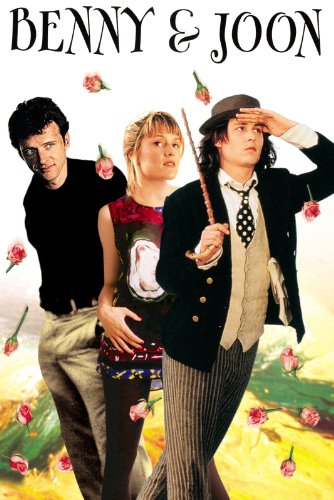

It saddens me, however, that certain critics somehow found Benny & Joon problematic. Throughout this post, I will directly answer the points made by one of these reviews. 
Spoiler warning: This review reveals plot points and thematic arcs, but don't worry. The formulaic storyline is already somewhat predictable; the joy is in seeing it played out on screen by interesting characters. You might even enjoy it more by having this autistic lens to view it through.

Why My Brain Latched On and Wouldn't Let Go

When I first saw this movie, I didn't know that 18 years later I would be diagnosed with Aspergers. But my subconscious knew that Joon was like me. I loved Joon. I admired her. I related to her. 

I identified with her odd little mannerisms, and knew that, deep down, I wanted to hold the same flat affect on my face and make those jerky, birdlike motions. Her descriptions of the world mirrored my own strange ways of thinking. Her outbursts and unusual speech patterns reflected an inner persona I was holding at bay, like I had this little bit of crazy locked up inside that escaped sometimes when no one was looking. 

Shortly after seeing the movie the first time, I had a dream. It was of a blond girl, dressed in gray, running nimbly along the top of a castle wall. When she reached the peak, she jumped. 

And I awoke.

I knew instantly that she was inspired by Joon. There was this deep sense that the girl was incredibly smart and talented, and yet she was also mentally immature, restricted, and damaged in some way.

It inspired a novella I wrote about a princess kidnapped into slavery, and her will is beaten out of her. She is rescued in adulthood, but never lost her stunted naiveté juxtaposed against a keen mental acuity. 

When I finished writing, I realized it was an autobiography: a metaphorical account of my own abuse by teachers and peers, an allegory of the way the world misunderstood me and of all the messages from a world that told me I was crazy and broken.
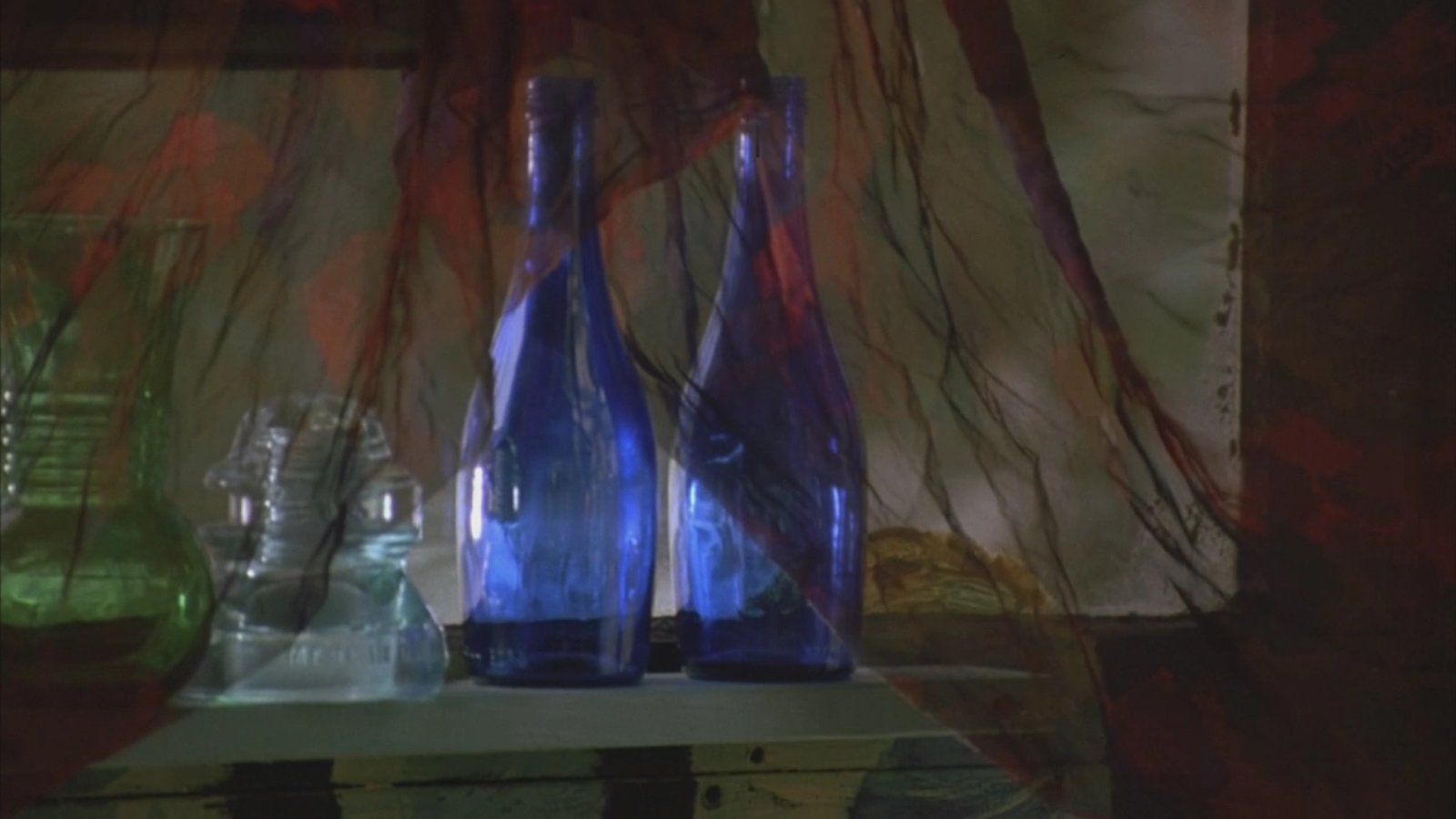
I even borrowed a few decorating tips from Joon.
Colored bottles, knickknacks, brightly colored wispy fabrics.
This is basically my room.
Looking back, I can see just how validating this movie was, and how beneficial it was to my own development. 

Movies like these give millions of undiagnosed autists something to connect to and a way to feel valued when the rest of the world is marginalizing us for being different.

Evidence of Autism

The movie refers to Joon simply as "mentally ill", and doesn't comment at all on Sam's condition. In 1993, "mentally ill" might have been the only diagnosis available for a high-functioning autist. So we're left to speculate.  

The most common armchair diagnosis I've seen online (aside from autism) is that Joon is schizophrenic, and that Sam is "quirky". Perhaps this is because autists are often not thought to be capable of creativity, and since Joon is a painter, she must be schizophrenic? 


So much creationizing!
And paintifying! Look at all that paintifying!
Misconceptions like this pervade both society and the medical community, which is one reason it took me so long to look into Aspergers for myself. Like Joon, I was merely "quirky" with a tendency towards "mental illness" that I kept under wraps. 


Autism traits tend to vary widely from person to person, some even manifesting in opposite ways. Many traits haven't been studied and are not part of official diagnostic manuals. When you read about autism long enough and learn about some of the root causes (like sensory processing issues), you start to notice patterns.

Let's consider Sam first. Here are his autistic traits that jumped out quite starkly:
    Joon's list is longer; she's on screen more.
    • Sudden outbursts, bad enough to chase away housekeepers (aka caregivers).
    • Needs things to be just right or she has an "episode".
    • Picky about housekeepers. Joon rejects them for a long list of imperfections. One committed sins of metaphor, and another, "her hair smelled". These indicate sensory processing issues and a need for certainty and literalism.
    • Seems comforted when she's painting. 
    • Particular about food.
    • Wears a helmet when riding in the car.
    • Shows deep creativity and intelligence but no one takes her seriously.
    • Fascinated with fire (for similar reasons why some autists are fascinated by water – watching the flow and movement).
    • Doesn't get along with peers (according to her doctor).
    • "Her stress level is always a factor in her display of symptoms," according to her doctor.
    • Gets hung up on moral details which results in outbursts of anger (moral rigidity).
    • "Her routine is everything to her," Benny describes to Sam.
    • Notable stimming (self-stimulation, like rocking or shaking a leg) when she's nervous.
    • Talks to herself. At some point Benny says that she hears voices, but as it's depicted on screen, it could easily be echolalia, or repetitive vocal stimming.
    • Nearly has a meltdown when Sam plays loud rock music (sensory processing). She takes away his radio. Later, she has trouble articulating the experience, particularly what she was seeing and hearing, which indicates that her verbal skills are conditional.
    • Kicks Sam out for "cleaning the house." Probably because her things got moved — highly anxiety-producing for many autists.
    She has other traits which are more difficult to describe. For instance, she may have a form of synesthesia, which is common in autists, as evidenced by a scene in which she describes how the raisins in her pudding must feel emotionally. Many autists sense that objects have personalities, either to a mild or extreme degree.

    There are only two times when she breaks with autistic behavior. 

    STOP: Not typical autistic behavior.
    At one point, she stands in the middle of the street and "directs traffic" with a ping pong paddle, and acts totally detached from reality. To be very clear, this is not something a typical autist would do, but might be more in line with schizophrenia or bipolar in a hyper-manic phase. 

    In another scene, she melts down on a bus in a high-stress situation. Initially, her behavior is in line with an autistic meltdown (including rocking and hand flapping). But as the tension heightens, she becomes paranoid. Such behavior could stem from an extreme meltdown, but not typically.

    These exceptions can be explained either by comorbidities (other conditions that occur alongside autism), or as necessary additions to drive the plot. 

    A Positive Portrayal
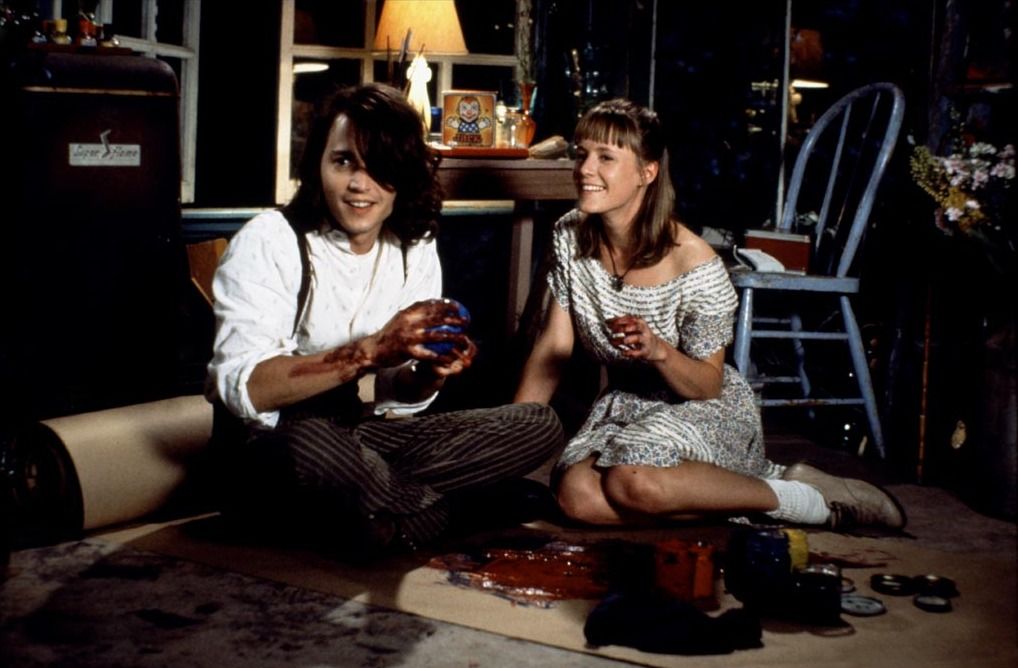
    Autistic people are capable of love, happiness, creativity, and agency.
    Overall, the film portrays autism in a positive and realistic light, neither overly glorifying it, nor bemoaning our miserable fate. It grapples with real issues that autists and our caregivers or family must face, and manages to frame it in a light-hearted comedy. The theme comes across strongly and can be summarized in this sentence: 

    "Disabled people have the right to make their own choices."

    The movie represents autists as human and promotes neurodiversity, highlighting the value we can provide to ourselves and those around us, even to those might otherwise see us as useless burdens.

    Moreover, Benny & Joon: 
    • depicts autists as capable of love and deserving of a love life; 
    • depicts autists as capable of happiness, even when we're not "productive" by societal standards; 
    • portrays a loving sibling relationship with an autist, where her brother is (for the most part) good to her. (Contrast this to the sibling relationship in Rain Man.)

    Romance

    The romantic arc truly sets this film apart. It doesn't merely depict a successful autistic love relationship; it goes further, contrasting it to Benny's neurotypical romance with Ruthie.
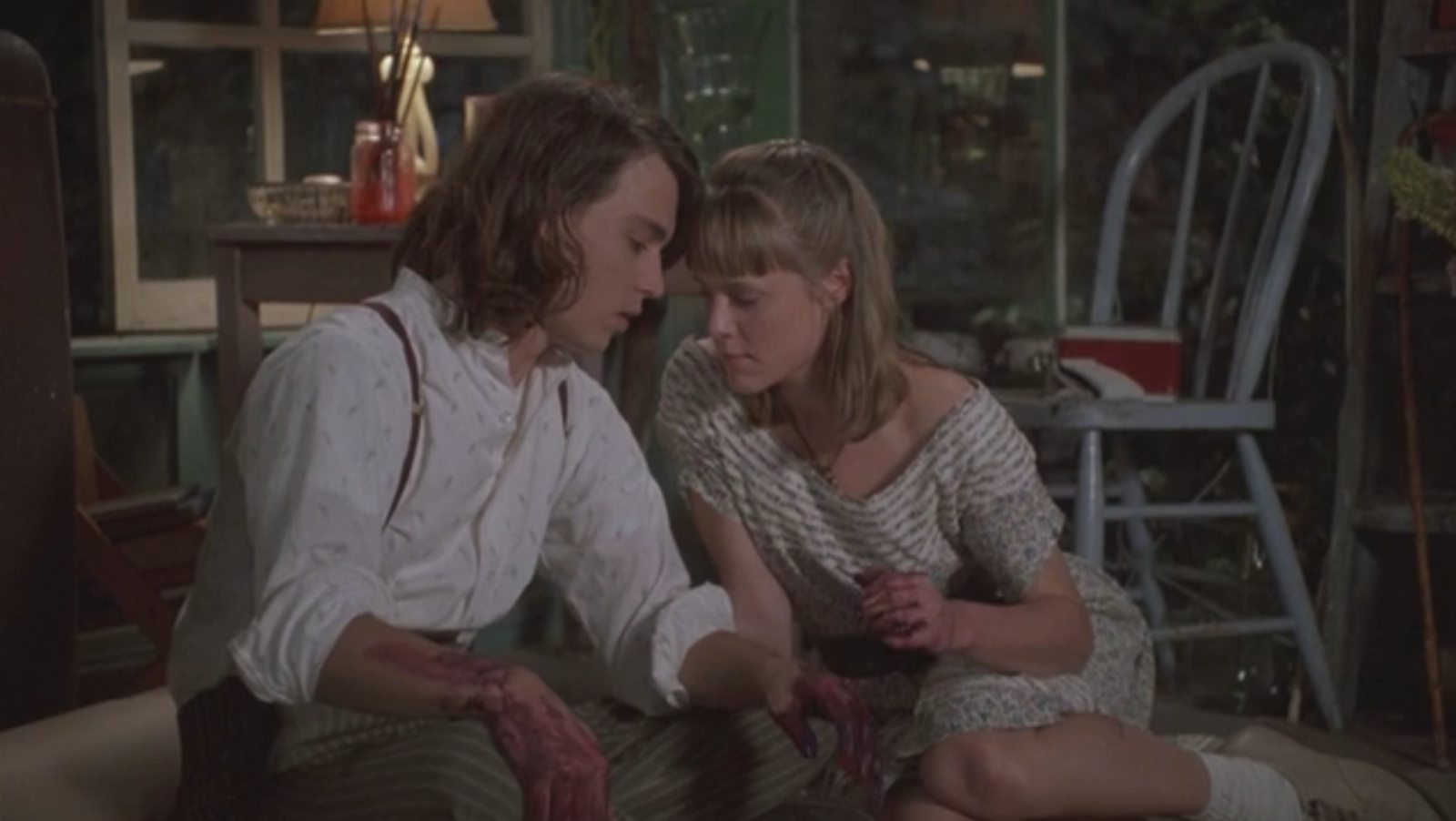
    Chemistry so powerful you can reach out and touch it.
    Sam and Joon's chemistry is palpable — innocent and enchanting. They seem to communicate without words. Each seems to have finally found a kindred soul, and, though neither has any experience with love, they take their first steps with grace, with no hint of shame or self-consciousness.

    In contrast, Benny and Ruthie's chemistry is awkward. Joon and Sam are far more socially capable (with each other) than the allistic (non-autistic) leads, who are constantly fumbling. Their barriers to love center around miscommunication and a lack of self-awareness. 

    Things are just not coming together for these two.
    These scenes are literally back to back.
    This is a reversal of the standard expectations and it filled me with glee. It reminds viewers that allists can also be poor at social interactions and empathy, even with each other.

    I often say that autism is characterized by extreme mental strengths and specializations juxtaposed against extreme mental deficits. Particularly sweet is how Joon and Sam's autistic extremes compliment one another, each filling in the void left by the other's weaknesses. 

    In one scene, barely-literate Sam tries to write to his mother. Joon rewrites the letter with hyperlexic skill. 
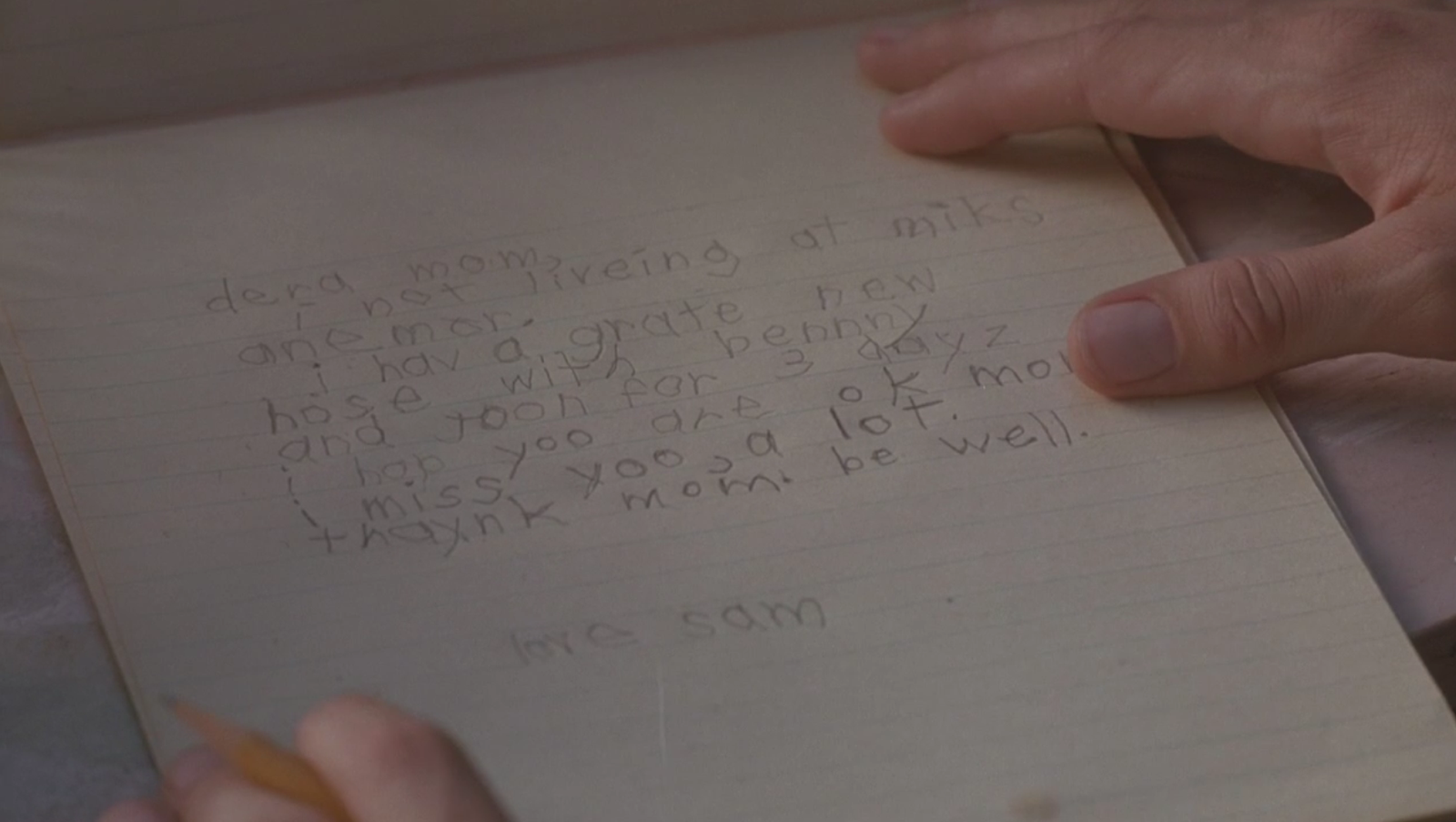
    One of the harsh realities of autism depicted here.
    Writing is difficult for many on the spectrum,
    whereas it comes easily to others, like me.
    She's got problems of her own, though. For instance, she is sloppy and disorganized. He cleans the house with acute, almost obsessive, attention to detail. In spite of her initial distress, she warms to this pretty quickly.

    Is Autism A "Disability"? Or A Difference In Cultures

    The story argues for what many autists already believe: that most problems associated with autism aren't intrinsically caused by autism itself. They are more often caused by neurotypical expectations that autists are unable to meet, in an environment that is set up exclusively for neurotypical success. 

    Every conflict Joon or Sam have is with the world, not with themselves or with each other. Individually, Joon is happy; Sam is happy. And they're happy together. 

    All of their problems are caused by allists: the endless stream of housekeepers who can't get along with Joon, the doctor who wants to send Joon to a group home, and the overprotective brother who won't let her make her own choices. It's a world in which their talents — her art and Sam's performance comedy — aren't appreciated — at least not enough that anyone will give them a living wage. 

    While Benny and Ruthie struggle to hook up, Joon and Sam progress blissfully and problem-free. No significant misunderstandings, no hidden defensiveness. You get the sense that if they could live on their own little planet, they'd be perfectly functional.

    This is a sentiment expressed by many autists. We feel like we were born on the WrongPlanet. Our most distressing symptoms come from living in an allistic world trying to conform to a neurotypical culture.
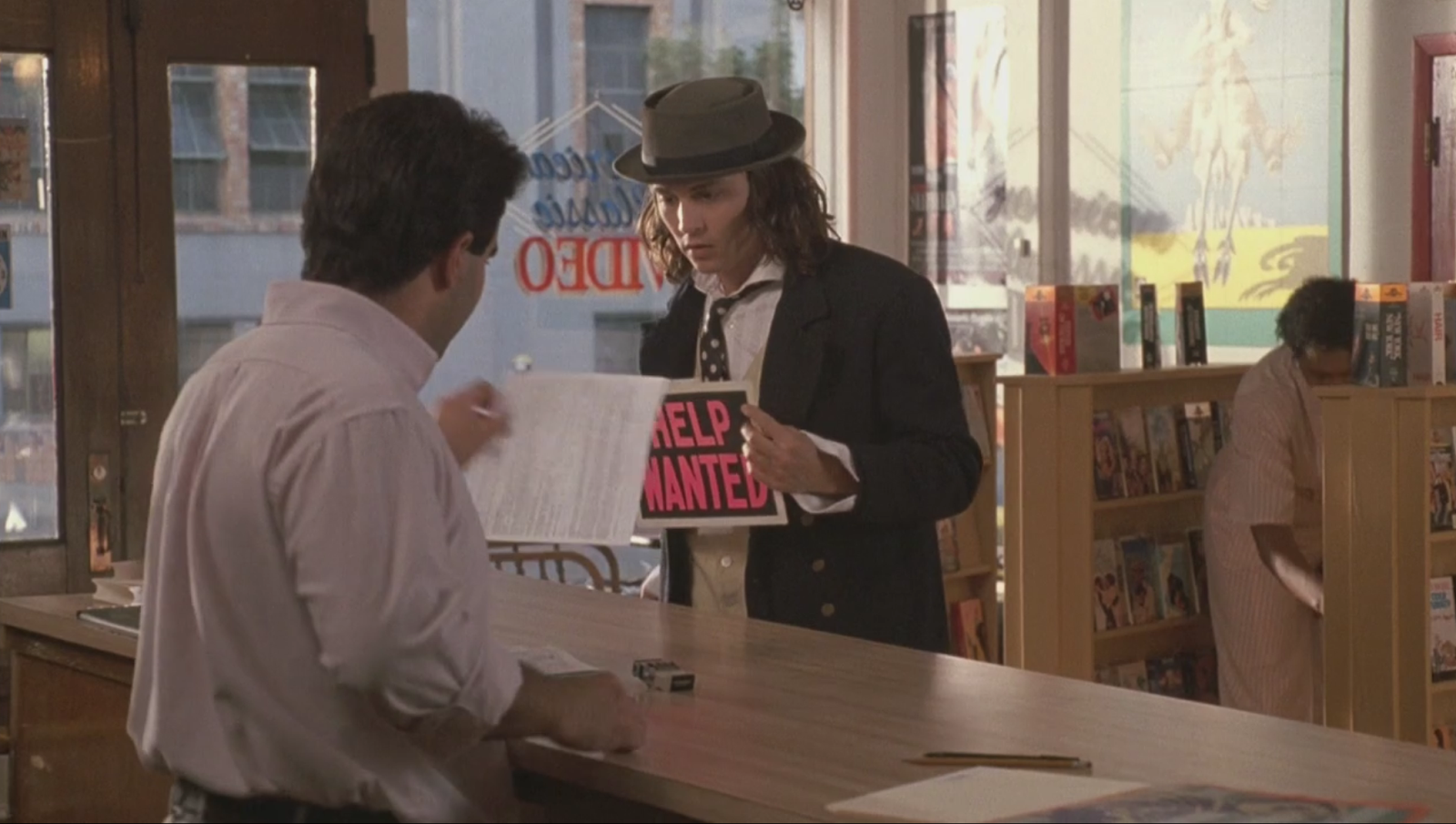
    The application process almost proves to be an unbeatable obstacle,
    as it is for many on the spectrum. 
    Sam eventually uses his expertise and passion for movies to get a job in a video store. Many autists struggle to feel like their idiosyncratic special interests are useful, but he figures out how to make a living at it. This isn't possible for all autists, but it's at least one role model in a world with none.

    It sends a message to society: Don't underestimate us. We have skills. Maybe not the exact skills you want us to have, or we might be rough around the edges, but widen your view and you might be surprised. 

    "Patronizingly Adorable" or Patronizingly Keeping Us In Our Place?

    Not all reviewers agree with me. Carleen Tibbetts titled her feminist btchflcks.com review, "The Patronizingly 'Adorable' Side of Schizophrenia." As an autistic woman, I found her review patronizingly dismissive, condescending, and ignorant.

    The author of the piece is bipolar, which makes her an authority on invisible disabilities in general, but it does not make her an authority on autism. Just to make it clear: being one neurotype does not make you an expert on other neurotypes. I live with a bipolar woman, a couple of OCDs, and another aspie. I'm careful to never assume their experience. 

    Even though she concludes that Joon is autistic, Tibbetts insists on using the word "schizophrenic," as if the two neurotypes are interchangeable. It's frankly offensive… probably to schizophrenics, too.

    Her lack of knowledge is revealed in a number of places. Most egregious is when she calls Joon's outbursts "tantrums", when she indicates that better meds might help with this and her "erratic behavior". Anyone familiar with ASD would call them "meltdowns," or at the very least, would use non-derogatory terms. They would also understand that, while some meds can help reduce anxiety and lower risk and severity of meltdowns, there is no medication currently that can treat the erratic behavior of autism. Many autists would resist taking such a med out of fear that it would change the very nature of who we are.
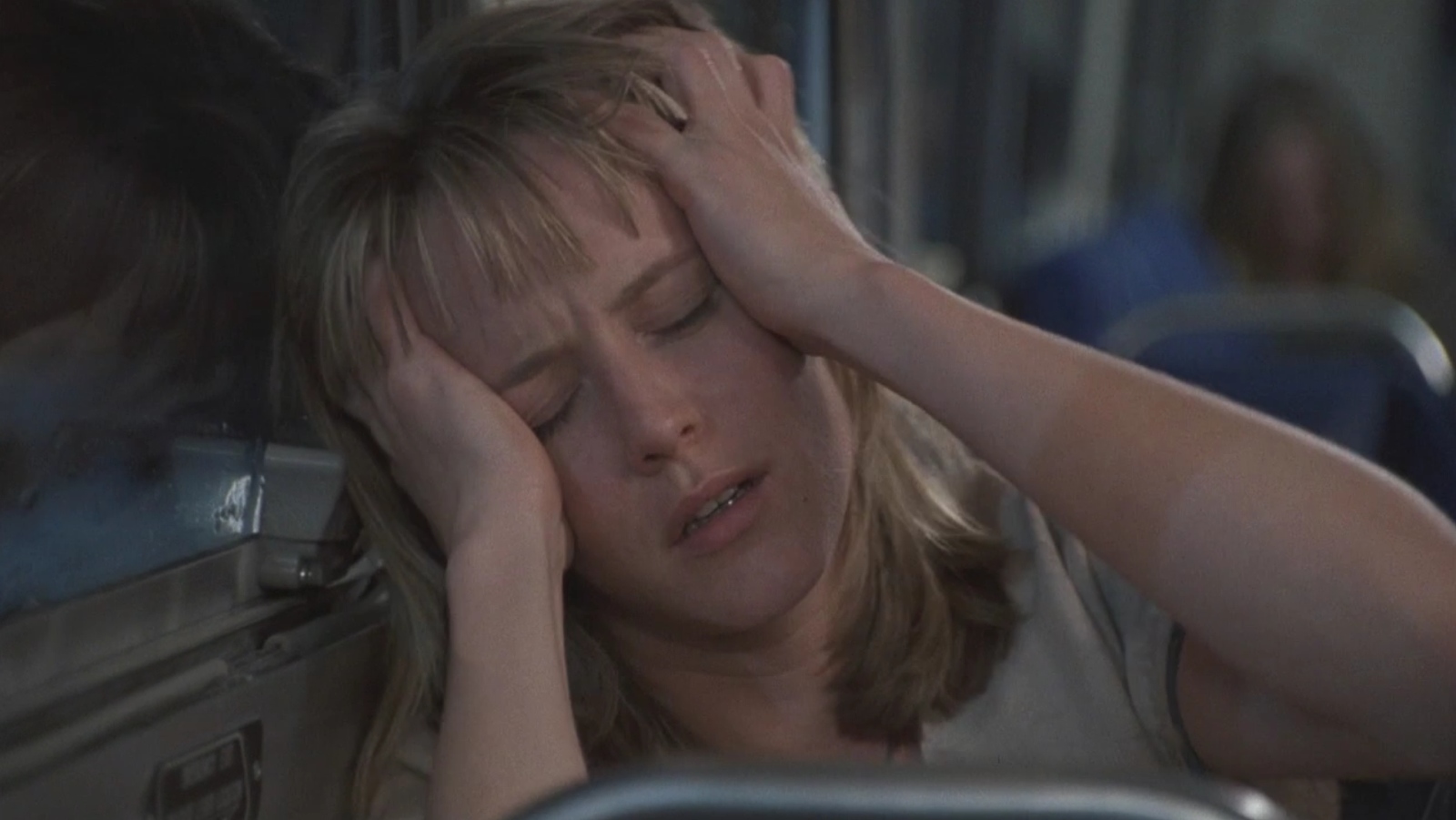
    This? Is not a "tantrum."
    "Tantrum" implies a childish, manipulative call for attention. In reality, a meltdown is a sensory overload that floods our brains with panic or emotional overwhelm, leaving us with little control over our bodies or speech. I tell people a meltdown is like an emotional seizure, and they should treat it like a medical problem. It's poor allyship to perpetuate this marginalizing stereotype.

    Her review flies under the flag of false advocacy. Her outrage at Benny & Joon reminds me of the Derpy Hooves controversy, where parents of developmentally challenged children found the My Little Pony character offensive, and protested to get her edited out of the show. In contrast, the majority of actual autists felt personally attacked. A character we related to was made invisible by our supposed allies. By deleting Derpy, they deleted us.


    Save Derpy
    I dare you not to cry.

    The organization Autism Speaks does the same thing in the name of autism advocacy. As does Ms. Tibbetts in this review.

    These patronizing, chivalrous, well-meaning allies are Disability Ventriloquists, because they think we're dummies and they try to speak for us. We remain dehumanized, pawns without agency, moved around on the chessboard by whoever speaks for us the loudest. 

    I am not your dummy.
    #ActuallyAutistic
    But I'd like to thank Ms. Tibbetts for being wrong, because she provides a good counterpoint for a detailed look at what this movie does right. 

    Too Adorkable? Oh noes!

    The Bitch Flicks review takes greatest issue with how Benny & Joon presents autism: 

    "There is NOTHING 'adorable' about mental illness… [This movie] trivializes and downplays a serious, crippling disorder." 

    Ahem. 

    First, autism is not a "crippling disorder," which is a point made within the film itself when Benny repeatedly underestimates Joon's and Sam's capabilities. For Bitch Flicks to perpetuate this stereotype in the face of a film that attempts to dismantle it is the pinnacle of ablism.

    Secondly, Benny & Joon is a comedy. Its job is making us laugh.

    Nevertheless, the darker aspects of autism are explicitly portrayed. Benny's life is severely impacted by having to take care of his sister. Sam is grateful to sleep on Benny's couch because his cousin had him sleeping under the sink. Joon nearly burns the house down a couple of times. One of her meltdowns is so uncomfortably and realistically depicted on screen that tears came to my eyes. 
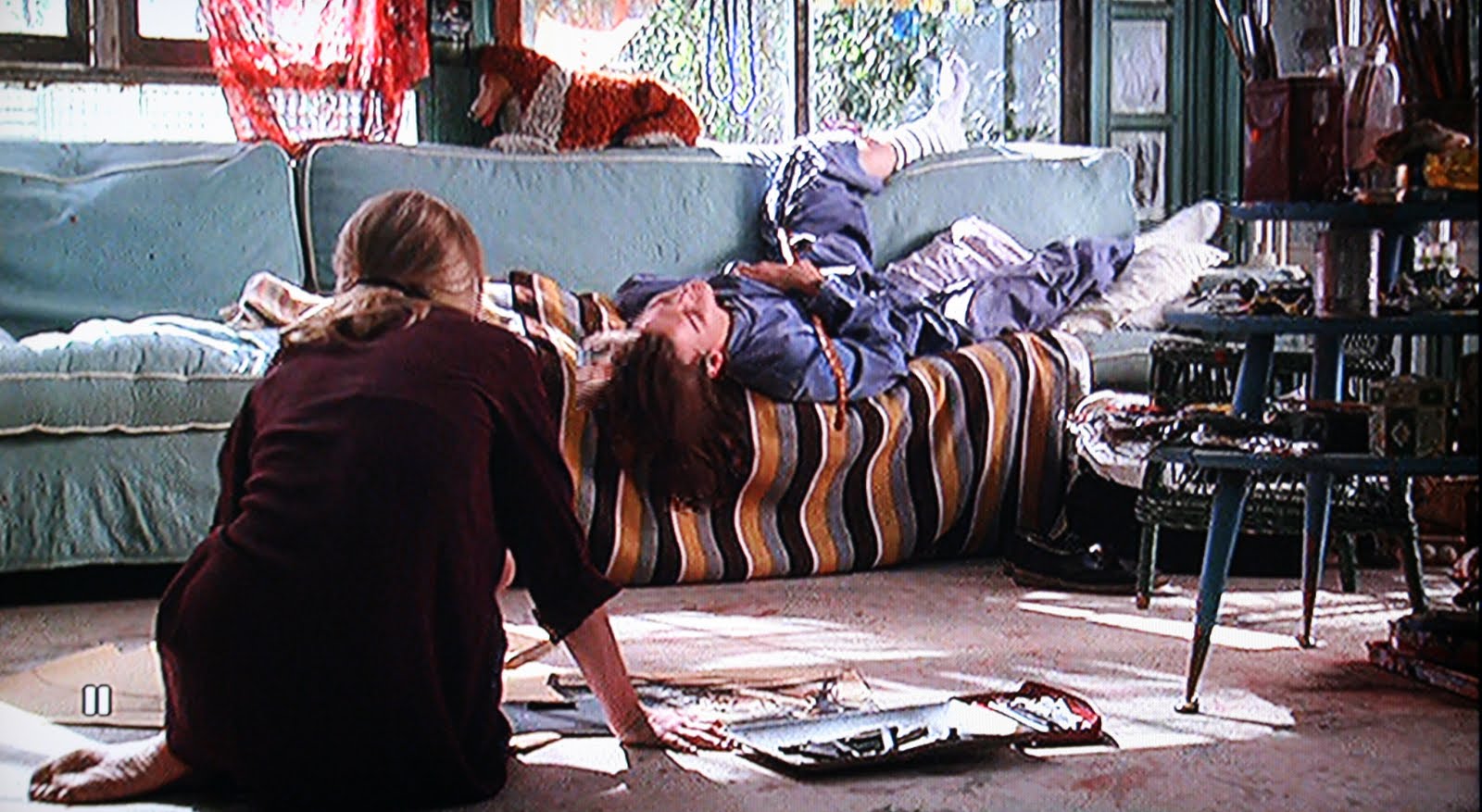
    This living situation is an improvement over
    sleeping under the sink.
    Autistic life sucks, and this movie gives us glimpses of these harsh realities lurking there beneath the surface.

    But life as an autist is awesome, too. We are quirky, fun-loving, talented. Yes, we can giggle and paint and be silly. When we're given full freedom to express ourselves, life is an absolute joy to live, both for us, and for our loved ones.

    Should we be condemned to misery, even in fiction, because disabilities are Serious Business? Are we to only have depressing horror films made about us? Is neurotypical society only allowed to see what a burden we are, and how unredeemable and useless we are? Are we supposed to have every light-hearted happy-ending stricken from our collective consciousness?

    If I need to see the untarnished details of the most horrific aspects of being "abnormal", I'll watch Melancholia, Girl Interrupted, Heavenly Creatures, or Silence of the Lambs. Or I'll just read my twitter feed for about 15 minutes. Or visit some of my own worst memories.

    Problematic? You Don't Get How Stories Work

    Some social justice media critics think that if any character acts badly, the whole story is problematic. 

    I want to destroy that idea right now. 

    Ka-boom.
    Problematic behavior exists in real life, and it therefore should be depicted in fiction.

    Why? Because those who experience these situations in real life need something relate to. And those who commit harmful behaviors need to see the harm they cause. 

    I wish more social justice champions understood how how plot and theme work. Here's a quick rundown:

    As Robert McKee points out in Story (a how-to book for screenwriters and novelists) a theme is an argument between two opposing values, which builds, until it reaches a final conclusion. 

    It's a debate: a fictional argument. You have to show characters acting in opposition. Who will turn out to be right? The story must depict the tragic results of acting on the opposing value. If no character behaves badly, the conclusion will ring hollow. 

    If you make a movie to combat ablism, you must depict ablism. To make a movie combatting sexism, you must portray sexism. To make a movie against racism, you've got to show some racists. Otherwise, you have a boring, unconvincing movie where nothing happens. And if we successfully remove these types of problematic content from our fiction, our movement will fizzle out and die.
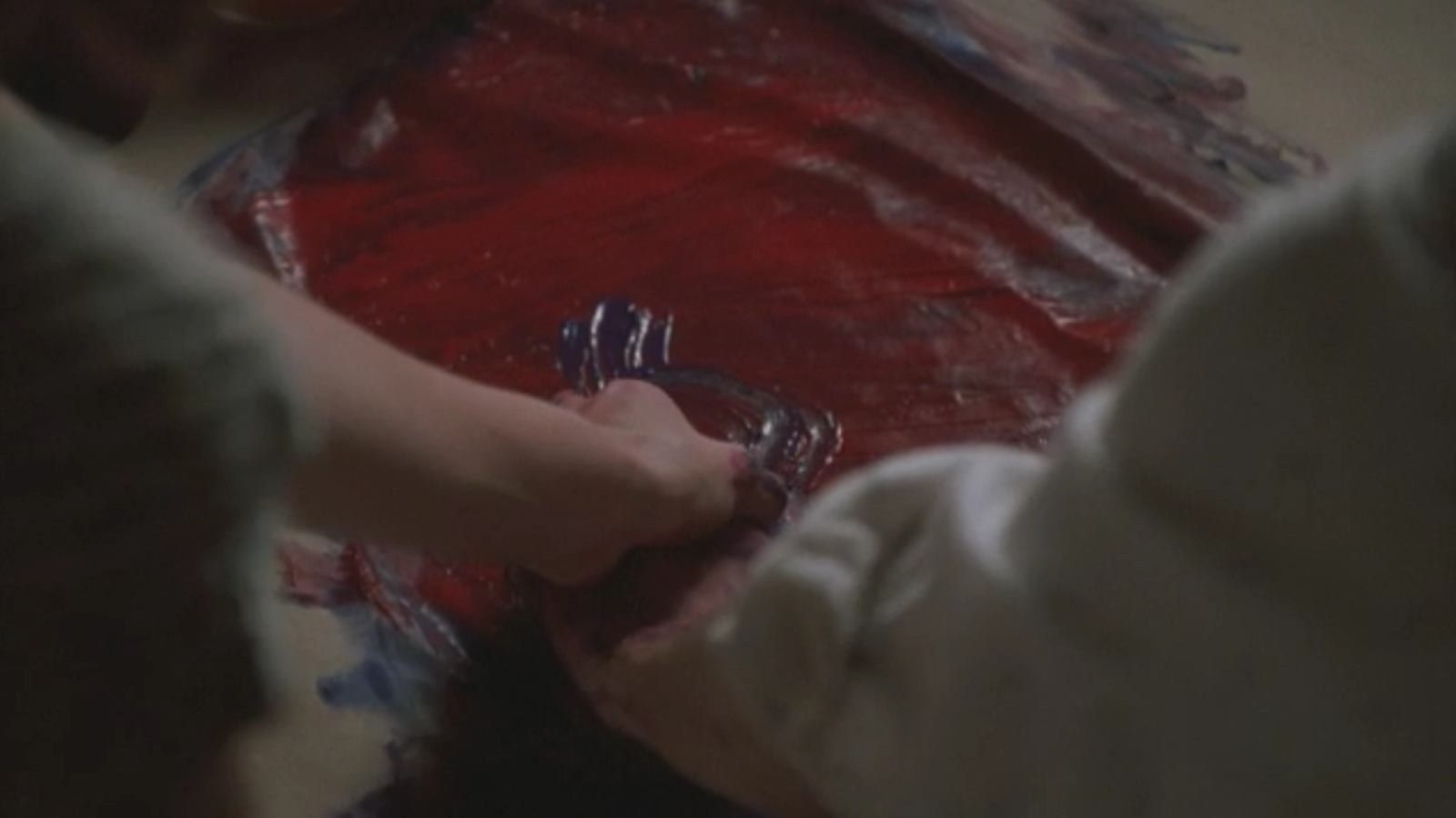
    Combatting oppresssion
    through the power of creativity
    So the real proof of a problematic story is in its ending. 

    We can tell by the ending that the theme of Benny & Joon is, "Developmentally disabled people are capable of, and have the right, to make their own choices." 

    The movie refuses to justify Benny's abuse of Joon and Sam. It condemns his behavior and then offers him redemption in a very simple form: Stop treating your sister like a child. Let her grow up and follow her own path.

    An ableist movie would have sent a smiling Joon off to live safely ever after in an institution. The theme would concluded: "Disabled people cannot think for themselves, so they should live out of sight lest they offend our sensibilities or hurt someone."

    Sadly, it seems that Ms. Tibbetts might have preferred that message.

    What Seems Problematic Is Actually Good Storytelling

    Benny has taken care of his sister since their parents died. He resists putting her in a group home because he thinks she won't be happy there, and he wants her to have some level of independence. This is admirable.

    But he isn't perfect. He is patronizing and overprotective. Moreover, he's in the difficult position most caregivers are: It's hard to care for someone with special needs. It sets limitations on his free time, money, social life, and energy. He's under a constant emotional drain.

    According to Tibbetts, "Benny & Joon deals far more with Benny’s 'unfortunate' situation of having to care for his sister than it does with Joon herself. Yes, although it does speak to Joon’s creativity, her spirit, etc., it doesn’t address the fact that Benny's kept her infantilized most of her adult life." 

    Firstly, the stress of caregiving shouldn't be so flippantly dismissed. It's clear in this movie that Benny simultaneously loves his sister, enjoys her company, and is becoming resentful of the distress she causes him. This is a realistic situation, and an understandable reaction. As an autistic mother with autistic children, I know this all too well.

    Secondly, the movie does far more than address Benny's well-intentioned but misguided mistreatment of his sister. This is, in fact, the whole point of the movie, as is shown through dialog, over and over again. 

    For example, Sam has been pursuing a job at the video store, where he hopes to capitalize on his special interest. But Benny thinks Sam should make a living as a performer. Sam resists this idea, and in the confrontation, Benny and Joon discuss Sam like he isn't there: 
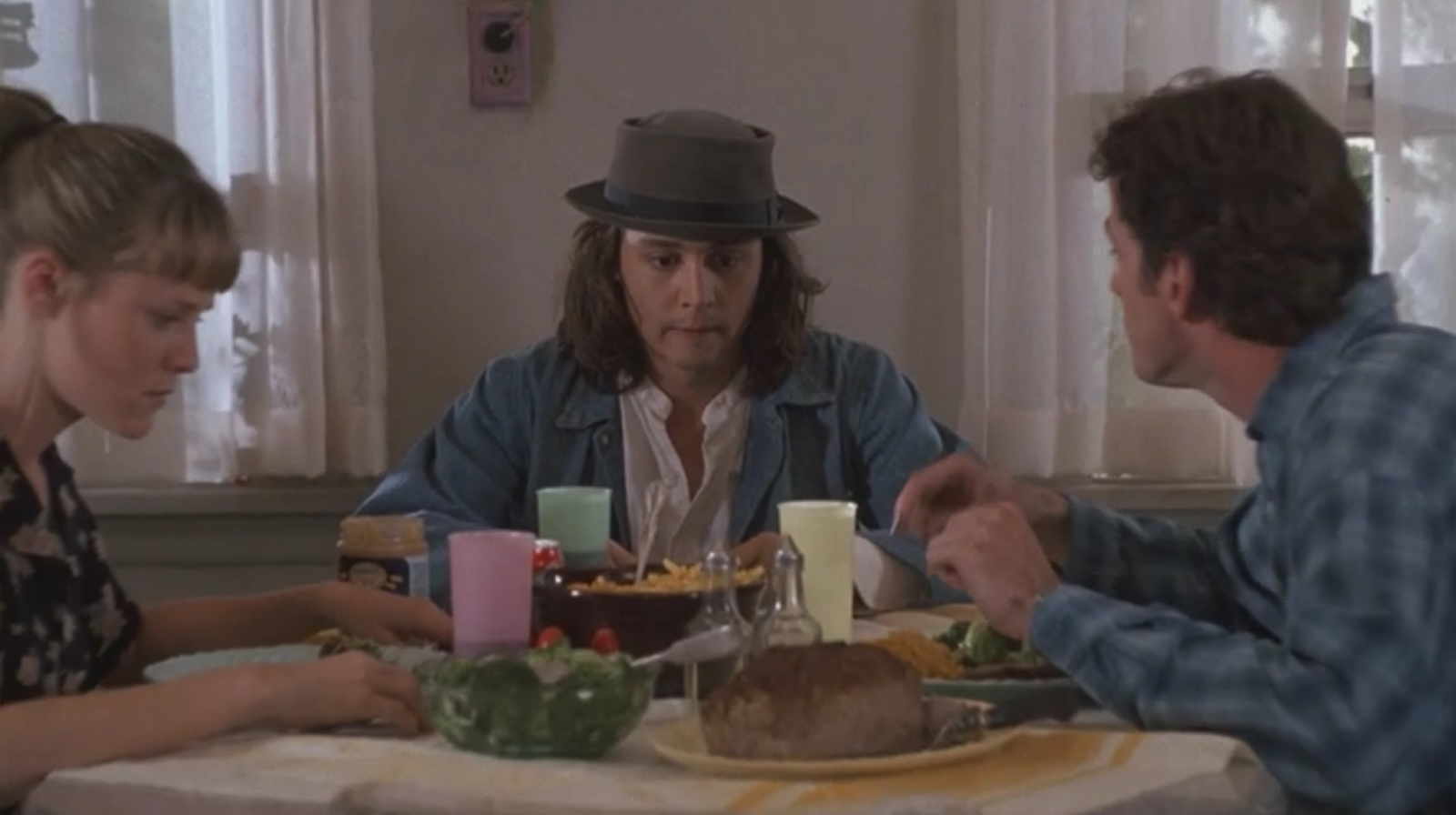
    This is what addressing ableism looks like.
    Benny comes off looking like a big huge jerk in this scene.
    "What is your problem?" Benny asks Joon. "This is his chance to do something, be somebody."

    "He is somebody," Joon replies.

    "Yeah, I know, but he wants to be more."

    "You don't know what he wants."

    The argument for autistic agency couldn't be any more clear. Joon is addressing Benny's tendency to infantilize Sam, and by extension, her. And since she's a strong female protagonist, she stands her ground against the onslaught.

    Then Joon turns and invites Sam into the conversation, and the couple tells Benny, in not so many words, that they're "together". 

    Right on cue, Benny blatantly denies Joon the agency to choose who she loves. He violently kicks Sam out of the house. When she defends her rights, he becomes physically violent with her and decides he's going to send her to the group home, because she can't make good decisions.

    Here she is robbed of agency in a very literal way: In the home, she will have no freedom or independence whatsoever. 
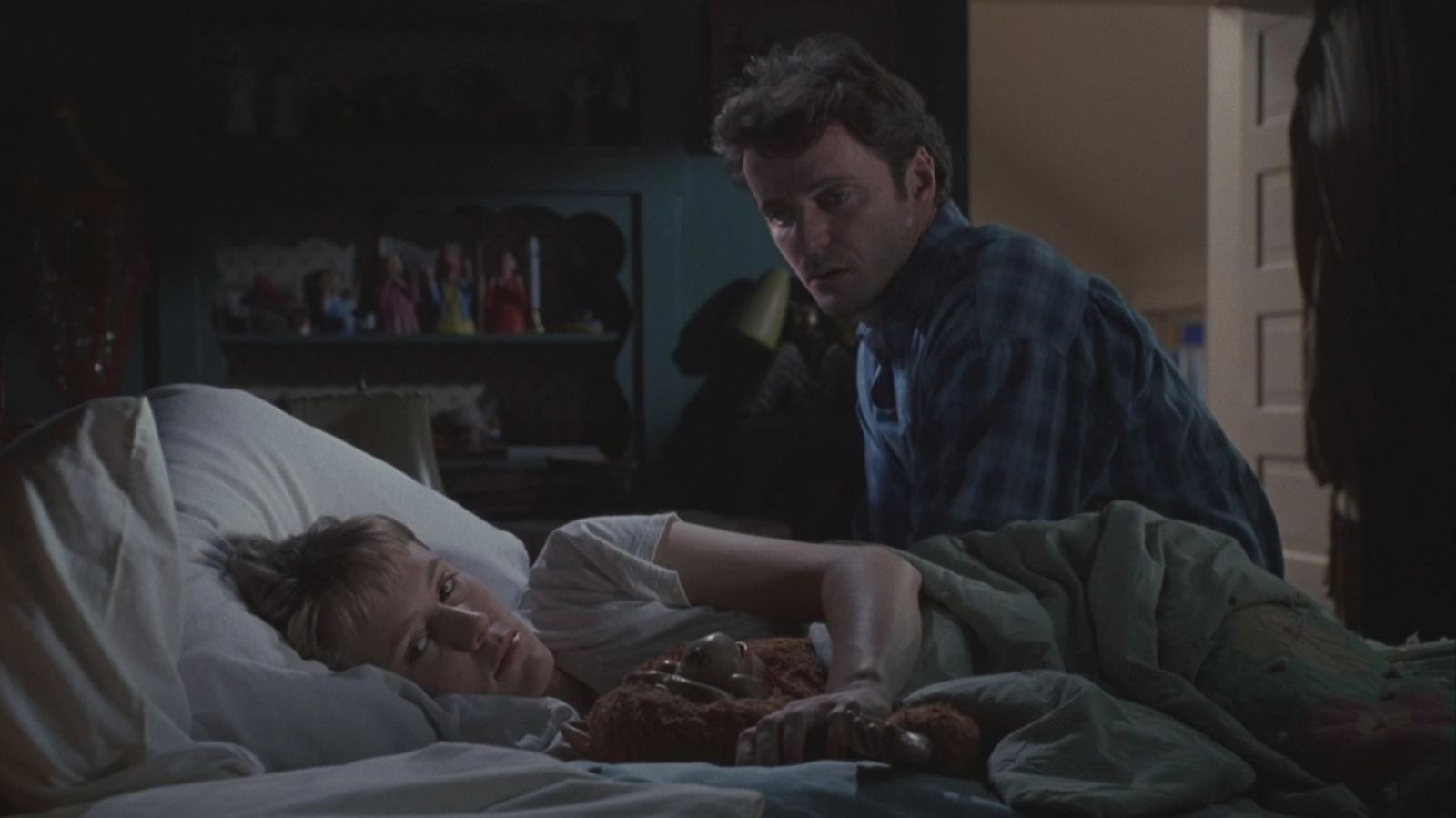
    Benny, after their fight: "Can I get you anything?"
    In my head canon, Joon replies, "Yes. A new brother!"
    Benny's attitude is ableist and misogynist. It's the well-meaning paternalism that mentally and physically disabled people have come to expect from real people everywhere. 

    Ms. Tibbetts can't seem to see how she, too, reflects this attitude in her review, or how it denies us freedom, agency, love, and the ability to be represented with these qualities. She tries to speak for us in the same way Benny speaks for Sam and Joon, an allist who assumes she knows what we want, what media we should or shouldn't relate to or find meaning in, because she knows what's best for us. 

    And that makes her a Disability Ventriloquist.

    This scene further drives home the point that our greatest problems come from allists who continually try to force us into unnatural and unfulfilling ways of being: whether it's in career direction, institutions, rigid social expectations, abusive teaching techniques, or through certain abusive therapies.

    In a later confrontation with Sam, Benny becomes even more abusive. His behavior crosses the line into bullying territory as he is both violent and verbally cruel to Sam: 

    "You wanna know why everyone laughs at you, Sam? Because you're an idiot." 

    The comment stings in this context, and the word carries with it the harsh power it once had before it started being so casually tossed around. The same hurtful power the "R" word still carries

    Just to be sure he's clear, Benny puts all the venom he possibly can into his voice and follows up with, "You're a first class moron."
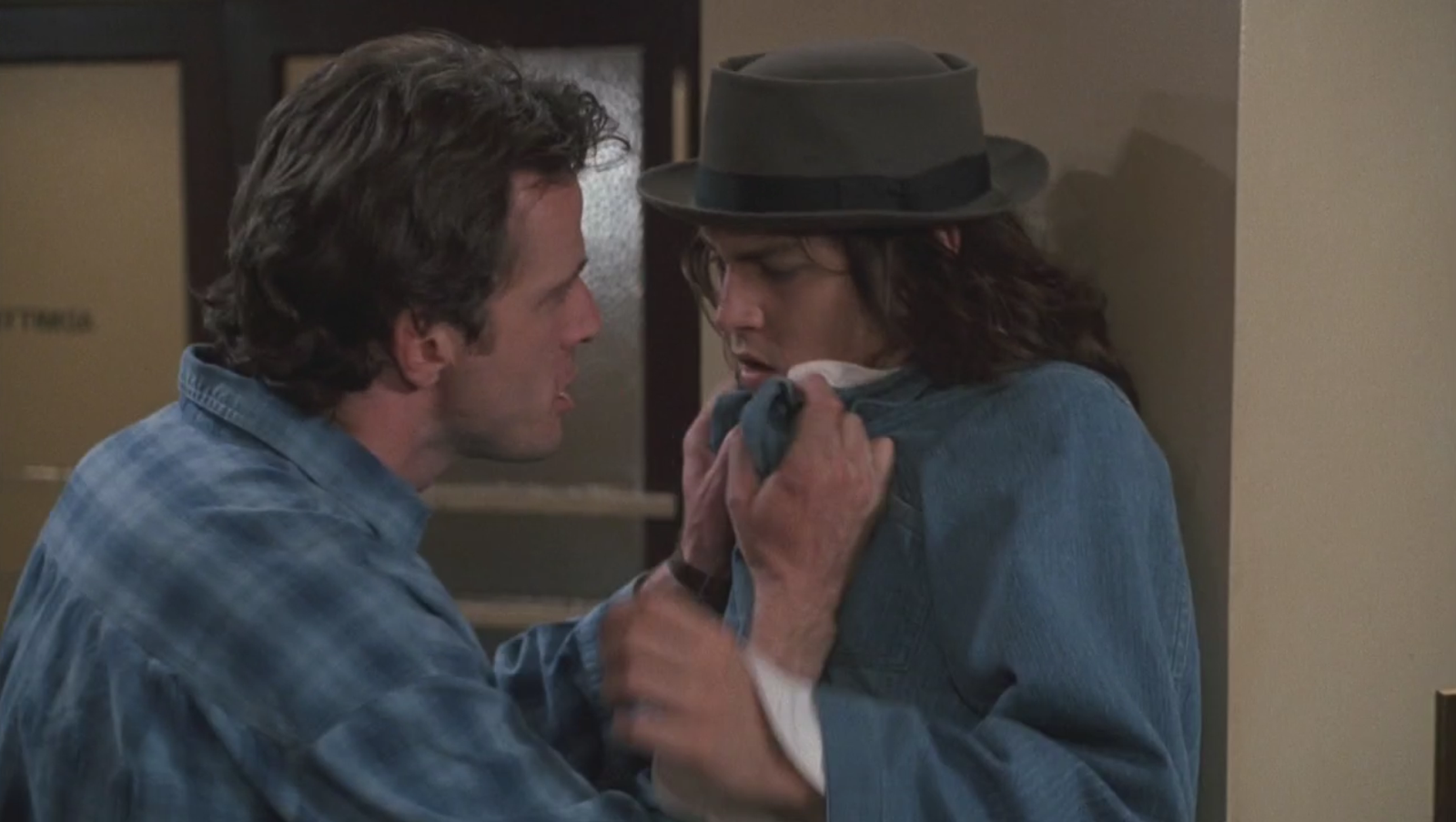
    Oh no. You did NOT just say that.
    In response, Sam displays that uncanny human insight that we autists are often capable of. He looks past Benny's aggressive outward behavior and pinpoints Benny's deeper issue: "You're scared," he says. Then he asserts his agency and condemns Benny: "I used to look up to you. Now I can't look at you at all."

    Sam's simple statement stops Benny. In that magical Hollywood moment, Benny realizes how he's mistreated Joon. 

    As soon as he sees her, he lets go of her, offering her autonomy, a chance to live on her own and to choose her own relationships. 

    "I'm through making decisions for you," he says, driving the theme home. 

    She rightly doesn't trust this change of heart, and during the ensuing argument, she displays the same uncanny autistic insight skill as Sam: "You need me to be sick," she accuses. 

    Of course this has been true in the past. But Benny has changed. When the doctor pressures Benny to put Joon in a group home ("Joon, we want what's best for you"), he gets his chance to prove his new course in the movie's final thematic pivot. He stops the doctor and says, "Why don't we ask Joon what she wants?"

    Conclusion: Joon is a human being; stop treating her like a child.

    The Feminist Angle

    There are few women in this movie. Two men fight over the girl. These are good flaws to point out. 

    But I'm also of this opinion: No movie can, or should, escape every problematic trope. When you're throwing new ideas at an audience, you've got to stay focused. If you veer too far from what the audience expects, your point gets lost. 

    Here's a film that tackles the theme of disability in an impressive way. This argument would have been diluted with sisterhood themes, had Benny instead been Bernadette. 

    Moreover, we got to see a rarely depicted male character: a nurturing and loving brother who sacrifices money, relationships, and free time, to take care of his sister. This important portrayal helps defeat patriarchal macho-male stereotypes.

    Or imagine if Sam was instead Samantha. In 1993, no one would have gone to see the movie, and even today, the disability theme would be completely obliterated by a more controversial LGBT theme.

    Tibbetts criticizes the film for giving Sam's talents more screen time than Joon's. But we actually spend far more time following Joon. She is the first person we see, and Sam isn't even introduced until 20 minutes in. We already like her, so we don't need to see dwell on her talents. (Plus, it's kind of boring to watch someone paint.)

    Sam is the manic pixie dream boy, who exists solely to liberate Joon from her cloistered, sheltered life. We're not rooting for Sam to win Joon; we're rooting for Joon to win Sam. It's a reversal of the boy-meets-girl trope, so we're watching Sam through her gaze; we need to see what she likes about him. 
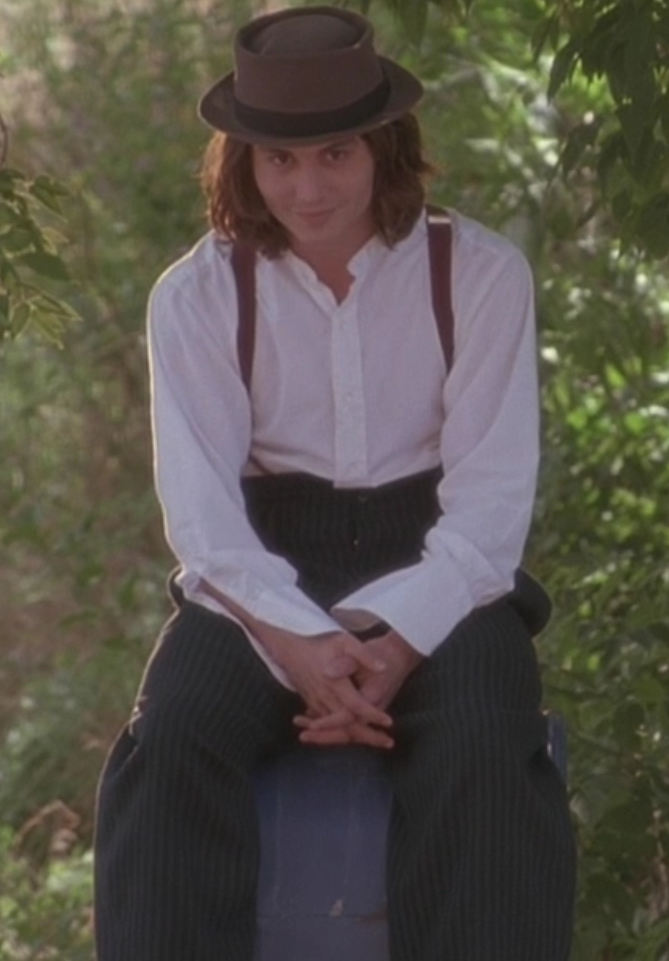
    So manic. So pixie.
    #Swoon
    After all, she is the one doing the choosing. And that portrayal gets two thumbs up from this feminist.

    Mental Health Services Are The Answer?

    Ms. Tibbitts claims the movie doesn't show Joon getting treatment of any kind. I have to wonder if she fell asleep during the scenes with the aforementioned doctor. In one scene, Joon exits a personal session which I assumed was therapy. She is also on medication. 

    There is no reason to assume this suddenly stops just because Joon moves out. We might also hope they are able to get social services. Those details are the sort of boring minutia reserved for Wikipedia, government websites, and clinic pamphlets. Not for the ending of a movie.

    Ms. Tibbitts' attitude seems to imply that getting help is easy and safe. It is not necessarily either. Most disabled people are pressed for money, professional help is expensive, insurance doesn't cover most of our needs, and social services are severely lacking and difficult to navigate, especially for people on the autistic spectrum. 

    Even when we can find a way to pay for it, and get through the paperwork, mental health services are desperately in shortage, in what USA Today calls a "man-made disaster".

    From:
    http://www.afaa-us.org/storage/documents/OAR_NYCA_survey_Current_State_of_Services_for_Adults_with_Autism.pdf
    Worse, there are many dangerous programs and therapies that cause more harm than good. Controversy surrounds even some commonly accepted practices. 

    A news story about abuses at the Judge Rotenberg Center
    just last summer. Yes, including electroshock therapy. (Aug 2014)
    Moving into a group home is not all happiness and daisies. As the doctor in the movie says, "These are very nice places," but they always say that. Institutions are often rife with all manner of abuses, ranging from neglect (and here), to electroshock therapy, to outright beatings and rape. It's nice to think those barbaric practices are a thing of the past, but we can't count on it.

    Yes, therapy, meds, treatment are often beneficial. But it's dangerous to pretend these solutions are the answer for every autistic person. It bothers me to no end when allists carelessly toss them out as if it's all solved. It most certainly isn't.

    For some autists, love is the only available answer. And many don't even have that.

    Strong Disabled Female Character

    Ms. Tibbetts' review concludes, "…the underlying message [is] that all Joon really needs is a stable romantic relationship rather than a stable relationship with herself, especially in relation to functioning in the outside world…" 
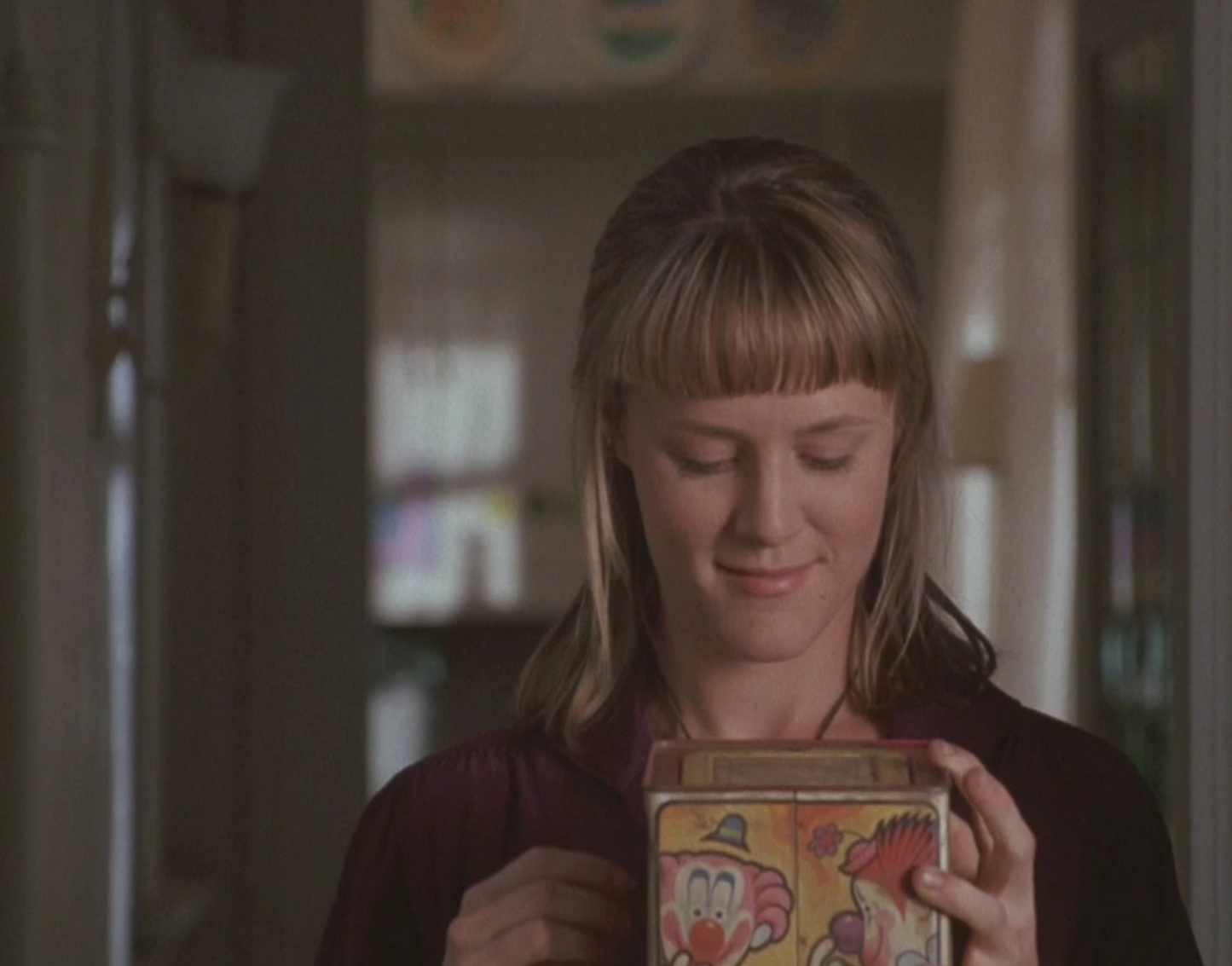
    Thanks for your concern Ms. Feminist Lady, but I like myself fine.
    Oh, and also?
    #Swoon
    Sorry, but Joon likes herself just fine, and neurotypicals be damned. She makes her choices and continues to assert herself against a powerful force that seeks to completely take away her freedom. Through meeting Sam, a fellow autist, she finalizes her already-begun self-actualization. She is liberated.

    She isn't cured or changed. Instead, the world changes to allow her to live as she chooses.

    This is what the neurodiversity and anti-ableism movement is fighting for. We wish to be accepted without having to force ourselves into the mold society expects of us. 

    Yet it's by this mold that the reviewer judges Joon. She implies that Joon isn't in a stable relationship with herself unless it's in relation to the neurotypical world. Her relation to herself, only to herself, as a hetro woman in love with another disabled person, letting him provide for her so she can make art, doesn't seem matter. 

    In the end, Joon and Sam don't let ableist messages control them. And neither will I. I won't let Disability Ventriloquists speak for me. No matter how well-intentioned they are.

    Labels: , , , , , , , , , , , , , , , , , ,

    Thursday, November 27, 2014

    What's at Stake: A Letter to My Family

    Last night, I sent an email to my white, predominantly conservative family. My partner, Jocelyn, forwarded it to her white, predominantly conservative family. One of her family members was touched and asked me to post it publicly.

    I realized that it was hypocritical to protest to strangers both online and on the streets of Seattle, while ignoring just a single appeal to my family. I can be just one more sign-holding body in a crowd, but I am more likely to influence those who know me. That thought stuck in my brain until I wrote and sent the email.

    After I wrote this letter, I heard an additional, chilling statistic. Death by police is the second leading cause of homicide in the state of Utah, where I was born. In the state where Darrien Hunt was killed for wearing a samurai costume. More citizens are killed by police, than by gang members, drug dealers, and child abusers. What could scream police state more than that?

    SUBJECT: What's at Stake...

    I wouldn't normally send a political email to family. But this is personal. I don't need you to agree with me, I don't want you to argue with me. I don't need you to do anything except consider these deeply felt concerns from a member of your family. 

    Sending this is is a little scary. I'm writing this with shaky hands. But I feel impelled, because this is perhaps the most important cause going on in my lifetime.

    I was raised in a certain political environment, one in which I learned Martin Luther King, Jr. was a communist, an instigator, an anti-American. I was taught that the protests of the Civil Rights Movement were drummed up by communist thugs trying to overthrow our American way of life. I learned all the reasons why the marches and riots of the 60s were unneeded and unjustified.

    But I also learned that I had the right to protect my life and property, with force, if needed. That if the state began to infringe on my rights, I should be willing to fight to the death to protect my liberty. I learned about the power of the Bill of Rights, especially the First and Second Amendments. 

    At home, I learned that freedom wasn't free. That sometimes, it had to be fought for.

    So on Monday, I protested the fact that Darren Wilson will not stand trial for killing a black teenager, Mike Brown, in Ferguson, Mo. I held up traffic. I stood before a line of impatient drivers, held up my hands, and chanted, "Hands up! Don't shoot!" 


    I laid down in the middle of the wet intersection of 4th and Pine, in silence for 4 and a half minutes, in remembrance of the 4.5 hours that Mike lay dead on a Ferguson street before the police moved his body. As I lay there, looking up at the skyscrapers, I listened to the sound of sobbing – sobs from people who were unwilling to believe that Mike Brown deserved to be shot. Sobs of people who can see that he was a human being deserving of life. 

    I listened to the sobs of people whose eyes are open to the injustices that happen every day, not just to Mike Brown, but to each black person who is killed every 28 hours by law enforcement, including Tamir Rice, a 12 year old, who just this week was shot in the stomach for playing with a gun that shoots plastic pellets. 

    And the double-injustice of police who are protected from accountability, so long as their victims "deserved it." 

    And the triple injustice of black people who rightly fear this could happen to them. This is a fear that none of us with white skin ever have to consider.

    I listened to the sobs of Roland and the sobs of our daughter Betsey as they embraced in the middle of the street. You see, they are both black. Roland whispered into Betsey's ear: "Now you promise me you'll do everything I have ever told you around police. Promise me." He is trying to save her life. 


    While I was learning childhood lessons that I should rise up in arms against a tyrannical police state, black children everywhere learn that they must always, always, say, "Yes, sir, no sir," no matter how unfairly they are treated by police or the government, no matter how long they suffer under constant oppression.

    The risk of death-by-officer is not an imaginary, trumped up fantasy that black people whine about because they have chips on their shoulders. I said 1 black person is killed by police every 28 hours. (http://www.occupy.com/article/black-man-killed-us-every-28-hours-police and http://www.usatoday.com/story/news/nation/2014/08/14/police-killings-data/14060357/and http://fivethirtyeight.com/features/how-many-americans-the-police-kill-each-year/


    These actions are excused by police, the media, and by society through dehumanizing, demeaning, and dismissing African-Americans, the majority of whom are upstanding, hard-working, kind, compassionate, good people. Because of these excuses, law enforcement is rarely held accountable for the abuse of their power.

    If this is not the kind of police state I was raised to abhor, I'm not sure what is.

    So Monday night, I stood within earshot of police officers and shouted, "F*ck the police!" (Pardon the profanity, but it pales in comparison to the offenses the state is committing against citizens of this great nation.) I knew it wasn't their fault, those Seattle officers who did a fine job routing traffic around us. Most officers work hard, and many of them are good people who risk their lives to protect all equally.

    But too many police officers are not held accountable for their abuse of state power. Do we truly believe that there are capital offenses where an officer should be the judge, jury, and executioner? 

    All this time spent debating whether Mike Brown had robbed a convenience store that day.. does it matter? Do we really believe that justifies his murder? We debate whether Mike Brown smoked pot. Does it matter? Is that a capital offense now? We debate whether he tried to kill Darren Wilson.. even though Mike Brown died, unarmed, 135 feet away from Wilson, because he had already been shot. He was running for his life.

    Here is what I would like you to consider.. not be convinced, but just.. consider. Consider whether we should be talking about whether each black person killed every 28 hours deserves to be killed. Ask whether Tamir Rice, 12 years old, should have been killed for playing with a toy gun. Ask whether Darrien Hunt, a teen dressed in a costume with a fake sword, on his way to a comics convention (something I have done) should have been gunned down by police. Ask if that's okay with you. Set aside your attempts to excuse this for one second and ask if that's okay.

    Since the death of Mike Brown in August, 14 black teenagers have been executed by police. Here is a list of their names, and who they were: http://www.thedailybeast.com/articles/2014/11/25/the-14-teens-killed-by-cops-since-michael-brown.html 

    I want you to reflect. Are you okay with supporting a government that allows this? 

    I am not okay at all. It flies in the face of everything I've been taught. And because it is not okay, I have been protesting. I will protest again on Friday. I intend to interrupt shoppers on Black Friday, to tangle up traffic in Seattle on the busiest shopping day of the year. And if it comes to it, I am willing to be tear gassed, arrested, and even shot, over this issue. 

    Because I am not free if my fellow citizens live in fear of the state. I have no rights if my children risk their lives for the crime of being black in America. I am not free if those abusing state power are not brought to justice, if those wearing government uniforms are not turned over to due process to stand trial for a crime that robbed an American citizen of his most important right: His right to life.

    And this is just the grossest of the injustices, which are too numerous to list in one email, that the people of Ferguson, indeed, citizens all over America, have endured for their entire lives. 

    These protests and riots did not happen in a vacuum. 

    As you hear these news stories of protests, riots, and burning buildings, ask yourself what you might do if these were white kids being gunned down by unaccountable representatives of the state? Before snapping to a judgement, just let this question linger. Think of the names of your sons and daughters. Imagine they have been killed, and now the police and news media are putting your child on trial. They are smearing your family's name, in order to make the killing seem fair and right. And your child is not the first. The cries of parents have gone unheard for years.

    If you are willing to bring out the guns to fight tyranny, but you judge these people harshly for doing the same, then ask yourself why. Ask yourself what is really the difference between your children, and theirs? 

    Take a moment to consider the words of Christ on this matter: Judge not that ye be therefore judged. If ye have done it unto the least of these, ye have done it unto me. Love thy enemy as thyself. 

    I'd ask you to consider one more thing: Stop thinking of black people as thugs. Stop thinking of black communities as crime-ridden neighborhoods where they feed upon their own. Stop thinking of them as useless welfare recipients, moochers off the state. Stop thinking of them as people with no sense of family values. Stop thinking of them as gang-bangers who are looking for trouble. These, and other pre-judgements, are dehumanizing. They are racist. They lead to snap judgements. 

    These lines of reasoning have allowed our society to get to this point, because we're encouraged to think that African-Americans deserve whatever is coming to them. It leads to false assumptions about why these problems plague black neighborhoods. There are alternative explanations. Those explanations are just a Google click away, if you're willing to actually listen to the perspectives of those who have walked in those shoes.

    As I lay in the intersection, looking up at the helicopters, Roland turned and asked me, "Luna.. how did you get here?" He meant, given my background, how did I end up on this side of the fence, being an activist for social justice causes, defying the law and disrupting traffic? 

    I hope this email gives some kind of inkling as to the answer. My principles haven't really changed. I've just changed who I am willing to apply them to. I have changed what I know of the world. I have stopped thinking of myself as oppressed, and discovered that there are those far more oppressed than I. I no longer fret over taxes and zoning laws. I fret over the lives of my fellow citizens who are treated differently for the color of their skin. I fret over Roland, and his brothers and sisters. I fret over my children.

    Some of you may be tempted to argue with me. I probably will not reply. Not only have I heard it all, I was once like you – I've thought it all, and I've written it all myself. I just needed to take this one chance to tell you what's at stake.

    Thanks for reading,

    With Love, 

    Luna

    Labels: , , , , , , , , , ,

    Monday, January 27, 2014

    Label Me, Illuminate Me

    The label-debate rages on, and now that I know I have autism, I have firmly come down on one side: I am in favor of labels.

    Labels can be used to dehumanize, to misconstrue, to overgeneralize, and to blind us to a person's humanity and individuality. As Wayne said, "If you label me, you negate me".

    Preach it, Wayne.
    Then party on.
    Actually, it was the philosopher Søren Kierkegaard who originally said this. "Butterflygirl" on Yahoo Answers summarized Kierkegaard thusly:
    Once you label someone you cancel out their own individuality and replace it within the boundaries of that label, so their individually has been restricted within that label and therefore, for all those who accept that label for that person they have no longer accepted that person for who they really are but understand them only to the limit of that label.
    And I know all too well from my research into mind control that loaded language combined with us vs. them techniques can indeed leverage labels to negate an individual and render her selfless. It can be used to dismiss external points of view. Labels can make a group insider feel benevolent and normal while demonizing outsiders as inhuman and evil.

    Many people fairly point out that labels, particularly psychological labels, can divide people. Labels can become truth. We are all individuals, but dumping thousands or millions of people into the same bucket removes some sense of self. Being labeled in school can make kids a target of bullying, not just from other kids but from teachers as well. It can impose expectations in education and in the workplace and among peers. Labeling can trigger tribalism and hostility. When people are unfairly labeled, they end up filling the role others expect of them.

    I've met people in person and read blog posts from people who hate all labels. Here's a dude summing up this line of thought:


    These are certainly valid drawbacks, but like The Spork of Truth, it has four tines. Hm, no I need something else... Like the Spoon of Truth, it has two edges. The same aspects that make labels problematic also give labels power. And when your label has power, you have power.
    I used to feel neutral about labels. Now, with my diagnosis, I've made up my mind. I now celebrate and champion labels. Bring it. More labels for all! Yes, definitely beware of all the pitfalls that come with labeling, and then proceed with label punch in hand, like that one episode of Dexter's Lab.
    Dexter and Dee Dee battle one another
    for the right to label everything and then
    [SPOILERS SPOILERS]
    They say, "If you meet one person with Asperger's, you've met just one person with Asperger's." This applies to everyone on the spectrum. We are all very unique individuals and our traits manifest in thousands of different ways – just like the colors in a rainbow. So the label seems perhaps limiting. Yet those of us with autism have more in common with one another than we do with allists (non-autists). Knowing that is useful.

    I lived 38 years of my life without a label to accurately describe who I am. As a kid, a psychologist said I was "hyperactive", and in my 20s, I got an ADHD label from a psychiatrist. These labels helped my know myself a little, but were not accurate enough. All my other traits, which I now know were due to Asperger's, were just unique snowflake Luna oddness. Easily distracted, hyperfocused, shy, socially awkward, nerdy, impolite, smart, pedantic, pensive, weird, misunderstood, seemingly self-centered, anxious, difficult, distant... I projected these "personality traits" which, prior to last April, were merely marks of my individuality with no cause. In essence, all of my negative traits were "choices", bad things I did that I didn't understand, that I blamed myself for. Shortcomings with no solution. Without the label, people still perceived me as all those things. But I had no way to talk about it, and no way to understand. I beat myself up for not going out more, not talking at parties, not flirting, not being productive, for being lazy, for being depressed, for being scared, for forgetting birthdays and being inconsiderate and clumsy and absent-minded.

    It's not the words that made me view myself this way. The words are just handles attached to concepts. I saw myself this way without words, because I naturally compared myself with others… Other people had it together and I never quite knew why I didn't.

    The words didn't make the reality. They only filtered it. And they weren't filtering it very accurately.

    The label allowed me to understand why. "Autism" is a label with definitions, entire books and websites and scientific studies devoted to defining what it means. It's a handle I can wrap my fingers around and manipulate. It's connected to a vast network of related thoughts by those who think about and study and share my autism. Now I can google this label and find others talking about it. Anyone affected by autism can share our thoughts and find others like ourselves. Without the label, all this would be impossible.

    Moreover, I can tell those around me, "I have Asperger's", and that means something. It's not an excuse, it's a reason. It describes why I'm different. Many times people don't know what it means, or they have misconceptions, and the label itself gives me an opportunity to educate them. Now anyone who wants to understand me better has ahold of that same handle, and I can draw their attention to all the connections attached to the handle.
    This is an actual font. Groovy.
    Available from Smashing Hub.
    That's the power inherent in words, in all words. As a society, we've agreed upon the meaning of these words. Words allow us to think and share our thoughts with one another. In the dystopic novel, 1984, the goal of Big Brother was to eliminate words, reduce the language down to only those necessary for labor. Authorities knew that if no one had words like"Freedom" or "Rebellion", they could never imagine or communicate about those concepts. Orwell called this language Newspeak.

    Those who wish to eliminate labels may have good intentions, but their wish expresses a nihilistic cynicism, and the resulting language would stifle thought, discussion, and mutual understanding.

    Knowing I have autism helps me understand myself. And it's helped others understand me. Getting personal for a moment, my sister and I have been distant most of our lives. I never quite understood why, and neither did she. A few months ago, when I told her I had Asperger's, and explained to her what that meant to me, it opened whole new doors in our relationship. She revealed that all these years, my behavior confused her and that, among other things, I seemed self-centered. The new label gave us a way to talk about it, and an alternate explanation for my actions. My label gave us a pathway to get closer.

    That's the thing. Yes, we are who we are, unique snowflakes. And we act how we act. But without taking on one label, people will give us another. Maybe the label isn't a word. Maybe it's just an image or feeling in their mind. They ascribe reasons and motivations for why we do what we do. People are going to think things about us anyway. Misunderstanding and hate is not the fault of the label. That's an oversimplification. Reality is more complex than that.

    Labels give us a starting point to explore those assumptions and identify ways in which individuals differ from the stereotypes -- stereotypes that already exist, even without the labels.

    Accurate labeling lets us be more in control of how other see us. That's part of what the coming out movement is. It is owning that label and maybe even proud of it. You think I'm gay? Yes, I'm gay. (Bisexual actually.) It's a label, and it's part of why I'm a unique snowflake, and now you can't rob me of that, because I wield the word for my own ends.

    You think I'm weird? Yes, I'm weird. And I'm partly weird because I have Asperger's. Letting everyone know that helps them understand me more, not less. And if they still choose not to understand, well that's their problem. Not the label's problem.

    I have embraced labels and now I advocate for them. If you feel mislabeled, then find labels that better describe you, give them a big hug, and offer them to others as replacements. Use them as a starting point for further discussion. Maybe it's hard to find labels for yourself. So invent new ones. The process of thinking about how to describe yourself is an opportunity for greater self-awareness and self-actualization. You are building a language for your own mind to use about itself.

    And when you share those labels with others, maybe they'll accept your self-identification, and maybe they won't. But at least you have something to own, a handle to hold on to when the world knocks you around.

    Let your labels illuminate you.

    Labels: , , , , , , , , , ,

    Wednesday, January 22, 2014

    Persuade the Bystanders

    This post has to do with social justice – you know, topics like privilege, racism, sexism, classism, ablism, and all the other ignorant and/or hatey "isms" worth railing against. I'll get to those in a second.

    In the early 90s, while arguing politics on BBS message boards, I realized an important truth that I've carried with me always:

    When people argue in public, they will almost never convince one another. But they do influence the lurkers. 

    WWIV message boards
    My view of the world when I
    learned this important life lesson 
    Sometimes the persuasion is instant. Now and then a lurker will timidly post and reveal that their minds have been changed. But most keep this fact to themselves. More often, the change is slow. These lurkers continue to follow similar arguments, until eventually, they are swayed by whichever side has collectively made the best case. I myself have drastically changed my mind on deeply held beliefs in this way, both by debating and merely watching debates. I've also seen it happen to other people. But it's rarely instant.

    It's hard to know that these neutral and persuadable lurkers exist. They are, by their nature, quiet. Very often, though not always, the more vocal a person is, the less likely they are to be convinced. So we tend to think everyone who doesn't use a megaphone is just like everyone who does. This is not true.

    I think about the topic of persuasion alot. I'm a writer. It's my job to persuade. I also love debate, a casual pastime since childhood. Roland makes a wonderful and challenging debate partner to help me better understand what works and what doesn't. On top of all that, I've studied mind control, otherwise known as "coercive persuasion" – the ability of manipulators to convince people against their will.

    I've learned about why people believe things, and what factors make people change their minds, and why people sometimes never will, even in the face of overwhelming evidence. Cognitive Dissonance is the mechanism we all employ to either accept or reject new ideas. It can be a very powerful barrier to persuading others that our position is correct. Cognitive dissonance is the source of all closed minds. There are ways around it – both ethical and unethical. I am more concerned with ethical persuasion.

    I consider myself an activist. Anyone who publicly advocates for social justice, is, in my opinion, an activist. I am a woman and I have what some might call an invisible disability. In all other areas, I am privileged, but I consider myself an ally against racism and other hateful thought systems. I firmly believe that everyone has a different life experience, and it is generally best to never dismiss anyone's position out of hand until I've done my utmost to understand – even if I don't agree.

    Social media has opened a new door for activists. It allows the voices of oppressed individuals and classes be heard by all kinds of people who were previously isolated. The internet democratizes the population by giving everyone a printing press and a megaphone. It's a beautiful thing. And every activist, whether they know it or not, is in a position to persuade.

    This guy is just like you. Everyone is listening.
    Choose well what you will say.
    Presumably, our goal is to make society better. To reduce hate. To eliminate ignorance. To eliminate unfairness. To prevent harm and prosecute those who hurt others. To pass laws that create the most equal playing fields for all people. Everyone should have the same opportunities for success, regardless of outward differences that so many in our society tend to get hung up on. I want everyone to be treated with respect, even if they're a different color, or gender, or disabled, or attracted to the same gender, or all the other things I've failed to list here.

    In a democracy, the best way to accomplish all of those goals is to be persuasive. Activism, when done right, is persuasive. Anything else is just preaching to the choir – it feels good, but nothing gets done.

    Given that, there are certain trends I see among activists that disturb me for two reasons:

    1. I don't consider these methods ethical. 
    2. These methods are not persuasive.

    The Outrage Machine is constantly producing new horrors to raise outrage. Sometimes I believe this machine is persuasive, and other times I don't. Sometimes I think it is counter-persuasive. And that concerns me. Because I'd like to see society improve. I'd like to employ the best tactics.

    So when I apply my mind to social justice activism, the question often is, "How could this message be more convincing? How can it reach more people and change minds?" Sometimes, I speak up about tactics. And when I do, my views are controversial, often because they're mistaken for taking up the other side's position, or being an apologetic, or dismissing someone's views, or perhaps not being enough of a cheerleader for our side, nor supportive enough of the cheerleaders we have.

    None of those are my goals. I'm not dismissing anyone. I am not being an apologist for the other side. I am not defending horrible behavior. I am merely goal-oriented and thinking about the best ways to achieve the goals that all online social justice activists share – more fairness and equality and tolerance for all.

    So here's my controversial statement of the day, and I hope you'll hear me out. Allow me to persuade you before immediately dismissing my argument. Please know I understand the counter-arguments and have given this alot of thought.

    I've seen a certain sentiment echoed via Twitter and the blogosphere, usually coming from an underprivileged person directed at a privileged person (i.e. woman or POC or disabled or trans* directed at a man or white person or cis), and it goes something like: "It's not my job to educate you!" It is often delivered in an angry or dismissive or antagonistic tone.

    In terms of accomplishing the above goals, it is entirely counterproductive.

    Yes, I do understand where this sentiment comes from. Especially when, say, a feminist of color has been asked 50,000 times by hostile racist misogynists to explain why she's so upset, and she's given the answer 49,999 times, and she's being asked to speak for her entire race and sex to flaming assholes who aren't listening anyway. Her anger is entirely justified. As is her weariness in the face of this seemingly Sisyphean task. It is true, in fact, that Google is just a fingertip away, and all ignorance about any topic can be quickly dissolved like salt in water.

    The endless questions themselves can be a rhetoric tool used to dismiss, belittle, and aggravate. So why waste even two seconds talking to those jerks?

    I get all that, I really do. 

    And I understand the double-bind. As a woman, I can choose to be labeled a bitch, or let people walk all over me. I am not allowed a middle ground. Similar thought-terminating cliches are employed to double-bind people of all other oppressed classes. I am not suggesting the answer is passivity and eternal politeness, bowing and scraping. Far from it.

    And most especially, I understand that most oppressed people have no interest in activism and just want to live their lives without being bothered. They just want to be accepted as average and normal and don't want to go around thinking about their orientation, disability, or skin color. They just want to live. In this latter case, I think the "It's not my job" answer is most appropriate – it isn't your job.

    But as activists and advocates, you actually have taken on the job. Maybe you only want it to be part time, but it's your job. By speaking up, you volunteered. It's a tough job, but worth doing.

    No, it's not your job to educate the hostile instigator of controversy or the timeline troll who is just trying to raise everyone's hackles. That guy will never be convinced by anything you have to say. It's true. He is so enmired in his beliefs and has made public declarations of it, so his cognitive dissonance is nearly impenetrable. It is likely that when the world changes completely into a social utopia dreamworld, he will go to his grave willfully ignorant and hating.

    Alas, educational and persuasive words are not meant for him. Your efforts are meant for the bystanders, the dozens, or hundreds, or even thousands of quiet lurkers. They're out there, neutral, or ignorant, or perhaps a bit racist or a bit sexist or any other *ist, but they don't feel too strongly about it. Not enough to join the argument. But they're curious, and they're watching each player make a case.

    Pretend today the Outrage Machine has identified a new controversy and brought it to the rapt attention of the information-obsessed internet. Someone gets wrongly fired from a job, or groped at a con, or catcalled, or outed, or harassed, or murdered. Some person in power says something stupid, and advocates reply, and anti-advocates reply back and everyone's in an uproar for a few days. This is the chance to convince that silent neutral ignorant majority. They are all near the fence. They think sexism is over, or transwomen are just confused, or bisexuals don't exist, or Muslims are more protected than Christians, or any black kid has it coming because no one gets shot unless they deserve it, or whatever ignorant thing they believe. This is the chance of advocates to convince those bystanders.

    I believed many of those things once. And over time, effective arguments finally got to me. Advocates finally educated me. And not usually because I sought the information out on my own. Usually because people kept pointing me in the right direction.

    That's the point of publicity. You hold a megaphone, just for a few minutes. You've gotten someone's attention. In this age of the information firehose, that's the hard part. Now how are you going to most effectively use it?

    Even the small-time advocate who doesn't have a big platform, who rarely says much of anything, has a huge opportunity to convince these silent types, because their followers are their friends and family. We are much more influential to those who know us and like us personally. Yes, those Facebook debates are frustrating, because no one seems to listen, but the silent readers are paying attention.

    This is how the most recent victories in marriage equality were won. A majority of the mainstream public was swayed, not through anger and righteous indignation, but through family members who came out of the closet and stood gentle yet firm on their rights to be gay and to love and commit to who they wanted. Eventually, few loving family members could imagine a world where government would bar their happy union.

    Injustices happen every moment of every day. Outrage can spark quite an inflagration of justifiable anger that sadly, too often, turns to hostility, or ostracism, or shaming, or personal attacks, or blatant logical fallacies. And when this happens, you've lost the moral high-ground. You have ceased being persuasive to that silent, neutral, convincible audience. And then it doesn't matter how right you are. Because anyone who might have been listening will turn against your position. The opponent wins an easy victory. Score one for the trolls.

    Even more tragic and destructive is when misdirected anger scares away fellow advocates and allies – even those in the same category as you (fellow women, POCs, LGBTs, etc). These are people who are already convinced of your position and want to help. They observe this open hostility and feel judged or lumped in with the haters because of a slight variance in opinion. They may already be marginalized by being themselves in the oppressed class, and now they feel marginalized further by activists who claim to be advocating on their behalf. They may become terrified to say anything, lest it be the wrong thing, lest your irate gaze turn instead on them. Intersectional individuals are even more at risk for this type of dismissal and marginalization.

    I myself have been in this position amongst my fellow feminists, sometimes for defending intersectional classes (like advocating trans rights to rad fems), and sometimes because my opinion on tactics differed. (I'm generally against boycotts, for instance.) I'm fine with people disagreeing with me, but I've also been actively shamed for holding these and other stances. Shaming, threatened ostracization, and personal attacks go too far.

    This type of hostility makes it frightening for fellow advocates to contribute to the discussion. For instance, it made me hesitant to write this post. Thankfully, I'm the type of person who doesn't like to be silenced in the face of fear. Others are understandably more timid.

    We need more diversity among our voices, not less. And more tolerance. Don't we believe that both diversity and tolerance lead to a better world? We need all the allies and advocates we can get, waving the banner, even if some choose to wave it differently than you. Punch upward, at the system, at the oppressors, at the powerful, at the bad guys. Don't punch sideways at the ally standing next to you just because she's easier to hit.

    Oppressed people have much to be angry about, and I would never rob them of their anger. Anger is a valuable emotion. It motivates and feeds energy into individuals and groups and causes. I am not advocating for less anger – I am suggesting that those energies be channeled persuasively to produce the most positive outcomes.

    (And in the moment of offense, especially when there is no audience, untamed anger very much has its place in defending individuals against in-progress assault or insult. I am not suggesting passivity or politeness when rights need to be asserted to a hostile *ist who insults and then demands to know why it was insulting. Since you likely will never convince him, that's the time to growl and spit, to say it's not your job, and to gently or not-so-gently direct him to Google. Or not. Depends on you and the situation.)

    Updated to add: Sally Kohn puts it another way in her TED talk, "Let's Try Emotional Correctness".


    And Mattie Brice recently wrote about anger in protesting the video games industry, suggesting we put behind us the demeaning hostility in 2013.

    It's true that maintaining the moral high-ground can be exhausting. We can't do it all the time. Sometimes I tweet or blog my opinions. Sometimes I advocate. Sometimes I give the long answer.

    And other times, I'm busy, I just direct people to others who have written more eloquently than I. Think about it: If, instead of saying, "Correcting your ignorance is not my responsibility," you suggest a well-known educational website or blog post on the topic, like Unpacking the Invisible Knapsack. You not only give that hostile person a chance at graceful, face-saving redemption, but more importantly, it's another opportunity to distribute that content to every single one of your other followers, many whom may have missed that particular blog post, or have never been exposed to content that you think is obvious because you read it a decade ago.

    There is much to be said for "brand awareness", a tactic commercial marketers understand well. Every chance you have to retweet the same link to yet another person asking the same questions, your other followers will begin to see that content as legitimate and worth consuming. Maybe they meant to read it last month, and have forgotten. You're making it easy for them to educate themselves and maybe even join the cause.

    Other times, the good fight becomes overwhelming. It's exhausting to be outraged all the time. That's when I take a break and let others pick up the banner. Sometimes I do this because I am far too emotional to think clearly. I'd rather sit out the Outrage Machine's churning than say something that loses points for my side. Because I want my team to win. It is possible to communicate "It's not my job" in a way that doesn't detract from the overall argument or your future ability to be persuasive. Like, "I don't have time to answer that right now. Could you please google 'cis privilege' on your own?" Or just remain silent. That gives the hostile troll the last word, but most likely, it will reflect worse on him than you.

    It's true that my white, cis, thin, mostly-abled, * privilege gives me the luxury to sit alot of these out, a privilege not everyone may have. I realize that I live relatively free from various kinds of hostility that lets me take these breaks. It's a little easier for me, perhaps, to go on an anger diet, to step away from the keyboard when emotions run too high. In many ways, this might be "easy for me to say". I still think these suggestions are tactically the most effective, and worth employing whenever possible.

    In the end, we all have our own journey and our own idea of what's right and wrong. It's your social media platform, so please, do with it what you will. But hopefully, I've been just a bit persuasive here.

    Let's go out and change the world.

    Labels: , , , , , , , , , , , , , ,