Thursday, November 27, 2014

What's at Stake: A Letter to My Family

Last night, I sent an email to my white, predominantly conservative family. My partner, Jocelyn, forwarded it to her white, predominantly conservative family. One of her family members was touched and asked me to post it publicly.

I realized that it was hypocritical to protest to strangers both online and on the streets of Seattle, while ignoring just a single appeal to my family. I can be just one more sign-holding body in a crowd, but I am more likely to influence those who know me. That thought stuck in my brain until I wrote and sent the email.

After I wrote this letter, I heard an additional, chilling statistic. Death by police is the second leading cause of homicide in the state of Utah, where I was born. In the state where Darrien Hunt was killed for wearing a samurai costume. More citizens are killed by police, than by gang members, drug dealers, and child abusers. What could scream police state more than that?

SUBJECT: What's at Stake...

I wouldn't normally send a political email to family. But this is personal. I don't need you to agree with me, I don't want you to argue with me. I don't need you to do anything except consider these deeply felt concerns from a member of your family. 

Sending this is is a little scary. I'm writing this with shaky hands. But I feel impelled, because this is perhaps the most important cause going on in my lifetime.

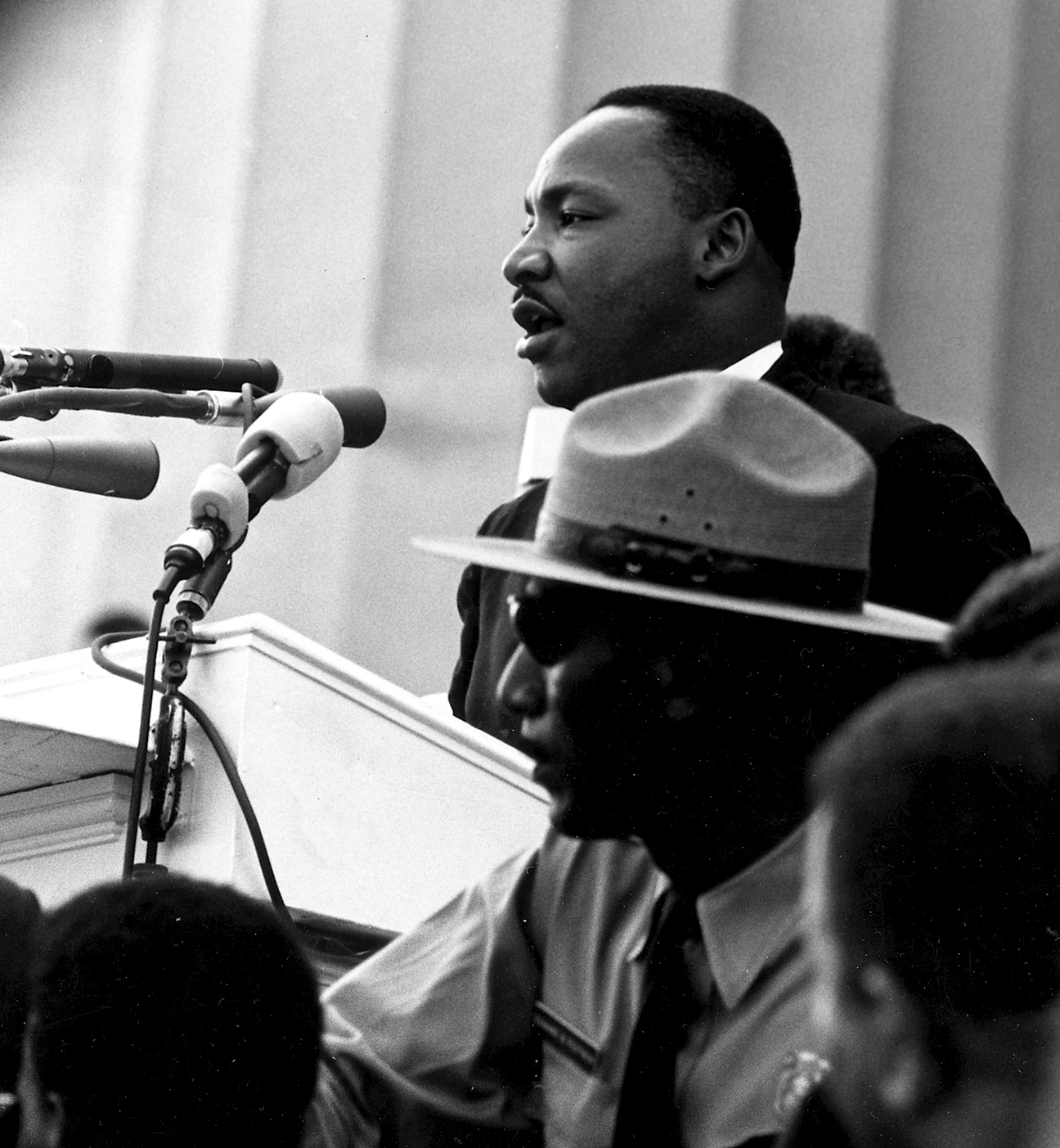
I was raised in a certain political environment, one in which I learned Martin Luther King, Jr. was a communist, an instigator, an anti-American. I was taught that the protests of the Civil Rights Movement were drummed up by communist thugs trying to overthrow our American way of life. I learned all the reasons why the marches and riots of the 60s were unneeded and unjustified.

But I also learned that I had the right to protect my life and property, with force, if needed. That if the state began to infringe on my rights, I should be willing to fight to the death to protect my liberty. I learned about the power of the Bill of Rights, especially the First and Second Amendments. 

At home, I learned that freedom wasn't free. That sometimes, it had to be fought for.

So on Monday, I protested the fact that Darren Wilson will not stand trial for killing a black teenager, Mike Brown, in Ferguson, Mo. I held up traffic. I stood before a line of impatient drivers, held up my hands, and chanted, "Hands up! Don't shoot!" 


I laid down in the middle of the wet intersection of 4th and Pine, in silence for 4 and a half minutes, in remembrance of the 4.5 hours that Mike lay dead on a Ferguson street before the police moved his body. As I lay there, looking up at the skyscrapers, I listened to the sound of sobbing – sobs from people who were unwilling to believe that Mike Brown deserved to be shot. Sobs of people who can see that he was a human being deserving of life. 

I listened to the sobs of people whose eyes are open to the injustices that happen every day, not just to Mike Brown, but to each black person who is killed every 28 hours by law enforcement, including Tamir Rice, a 12 year old, who just this week was shot in the stomach for playing with a gun that shoots plastic pellets. 

And the double-injustice of police who are protected from accountability, so long as their victims "deserved it." 

And the triple injustice of black people who rightly fear this could happen to them. This is a fear that none of us with white skin ever have to consider.

I listened to the sobs of Roland and the sobs of our daughter Betsey as they embraced in the middle of the street. You see, they are both black. Roland whispered into Betsey's ear: "Now you promise me you'll do everything I have ever told you around police. Promise me." He is trying to save her life. 


While I was learning childhood lessons that I should rise up in arms against a tyrannical police state, black children everywhere learn that they must always, always, say, "Yes, sir, no sir," no matter how unfairly they are treated by police or the government, no matter how long they suffer under constant oppression.

The risk of death-by-officer is not an imaginary, trumped up fantasy that black people whine about because they have chips on their shoulders. I said 1 black person is killed by police every 28 hours. (http://www.occupy.com/article/black-man-killed-us-every-28-hours-police and http://www.usatoday.com/story/news/nation/2014/08/14/police-killings-data/14060357/and http://fivethirtyeight.com/features/how-many-americans-the-police-kill-each-year/) 


These actions are excused by police, the media, and by society through dehumanizing, demeaning, and dismissing African-Americans, the majority of whom are upstanding, hard-working, kind, compassionate, good people. Because of these excuses, law enforcement is rarely held accountable for the abuse of their power.

If this is not the kind of police state I was raised to abhor, I'm not sure what is.

So Monday night, I stood within earshot of police officers and shouted, "F*ck the police!" (Pardon the profanity, but it pales in comparison to the offenses the state is committing against citizens of this great nation.) I knew it wasn't their fault, those Seattle officers who did a fine job routing traffic around us. Most officers work hard, and many of them are good people who risk their lives to protect all equally.

But too many police officers are not held accountable for their abuse of state power. Do we truly believe that there are capital offenses where an officer should be the judge, jury, and executioner? 

All this time spent debating whether Mike Brown had robbed a convenience store that day.. does it matter? Do we really believe that justifies his murder? We debate whether Mike Brown smoked pot. Does it matter? Is that a capital offense now? We debate whether he tried to kill Darren Wilson.. even though Mike Brown died, unarmed, 135 feet away from Wilson, because he had already been shot. He was running for his life.

Here is what I would like you to consider.. not be convinced, but just.. consider. Consider whether we should be talking about whether each black person killed every 28 hours deserves to be killed. Ask whether Tamir Rice, 12 years old, should have been killed for playing with a toy gun. Ask whether Darrien Hunt, a teen dressed in a costume with a fake sword, on his way to a comics convention (something I have done) should have been gunned down by police. Ask if that's okay with you. Set aside your attempts to excuse this for one second and ask if that's okay.

Since the death of Mike Brown in August, 14 black teenagers have been executed by police. Here is a list of their names, and who they were: http://www.thedailybeast.com/articles/2014/11/25/the-14-teens-killed-by-cops-since-michael-brown.html 

I want you to reflect. Are you okay with supporting a government that allows this? 

I am not okay at all. It flies in the face of everything I've been taught. And because it is not okay, I have been protesting. I will protest again on Friday. I intend to interrupt shoppers on Black Friday, to tangle up traffic in Seattle on the busiest shopping day of the year. And if it comes to it, I am willing to be tear gassed, arrested, and even shot, over this issue. 

Because I am not free if my fellow citizens live in fear of the state. I have no rights if my children risk their lives for the crime of being black in America. I am not free if those abusing state power are not brought to justice, if those wearing government uniforms are not turned over to due process to stand trial for a crime that robbed an American citizen of his most important right: His right to life.

And this is just the grossest of the injustices, which are too numerous to list in one email, that the people of Ferguson, indeed, citizens all over America, have endured for their entire lives. 

These protests and riots did not happen in a vacuum. 

As you hear these news stories of protests, riots, and burning buildings, ask yourself what you might do if these were white kids being gunned down by unaccountable representatives of the state? Before snapping to a judgement, just let this question linger. Think of the names of your sons and daughters. Imagine they have been killed, and now the police and news media are putting your child on trial. They are smearing your family's name, in order to make the killing seem fair and right. And your child is not the first. The cries of parents have gone unheard for years.

If you are willing to bring out the guns to fight tyranny, but you judge these people harshly for doing the same, then ask yourself why. Ask yourself what is really the difference between your children, and theirs? 

Take a moment to consider the words of Christ on this matter: Judge not that ye be therefore judged. If ye have done it unto the least of these, ye have done it unto me. Love thy enemy as thyself. 

I'd ask you to consider one more thing: Stop thinking of black people as thugs. Stop thinking of black communities as crime-ridden neighborhoods where they feed upon their own. Stop thinking of them as useless welfare recipients, moochers off the state. Stop thinking of them as people with no sense of family values. Stop thinking of them as gang-bangers who are looking for trouble. These, and other pre-judgements, are dehumanizing. They are racist. They lead to snap judgements. 

These lines of reasoning have allowed our society to get to this point, because we're encouraged to think that African-Americans deserve whatever is coming to them. It leads to false assumptions about why these problems plague black neighborhoods. There are alternative explanations. Those explanations are just a Google click away, if you're willing to actually listen to the perspectives of those who have walked in those shoes.

As I lay in the intersection, looking up at the helicopters, Roland turned and asked me, "Luna.. how did you get here?" He meant, given my background, how did I end up on this side of the fence, being an activist for social justice causes, defying the law and disrupting traffic? 

I hope this email gives some kind of inkling as to the answer. My principles haven't really changed. I've just changed who I am willing to apply them to. I have changed what I know of the world. I have stopped thinking of myself as oppressed, and discovered that there are those far more oppressed than I. I no longer fret over taxes and zoning laws. I fret over the lives of my fellow citizens who are treated differently for the color of their skin. I fret over Roland, and his brothers and sisters. I fret over my children.

Some of you may be tempted to argue with me. I probably will not reply. Not only have I heard it all, I was once like you – I've thought it all, and I've written it all myself. I just needed to take this one chance to tell you what's at stake.

Thanks for reading,

With Love, 

Luna

Labels: , , , , , , , , , ,

Wednesday, January 22, 2014

Persuade the Bystanders

This post has to do with social justice – you know, topics like privilege, racism, sexism, classism, ablism, and all the other ignorant and/or hatey "isms" worth railing against. I'll get to those in a second.

In the early 90s, while arguing politics on BBS message boards, I realized an important truth that I've carried with me always:

When people argue in public, they will almost never convince one another. But they do influence the lurkers. 

WWIV message boards
My view of the world when I
learned this important life lesson 
Sometimes the persuasion is instant. Now and then a lurker will timidly post and reveal that their minds have been changed. But most keep this fact to themselves. More often, the change is slow. These lurkers continue to follow similar arguments, until eventually, they are swayed by whichever side has collectively made the best case. I myself have drastically changed my mind on deeply held beliefs in this way, both by debating and merely watching debates. I've also seen it happen to other people. But it's rarely instant.

It's hard to know that these neutral and persuadable lurkers exist. They are, by their nature, quiet. Very often, though not always, the more vocal a person is, the less likely they are to be convinced. So we tend to think everyone who doesn't use a megaphone is just like everyone who does. This is not true.

I think about the topic of persuasion alot. I'm a writer. It's my job to persuade. I also love debate, a casual pastime since childhood. Roland makes a wonderful and challenging debate partner to help me better understand what works and what doesn't. On top of all that, I've studied mind control, otherwise known as "coercive persuasion" – the ability of manipulators to convince people against their will.

I've learned about why people believe things, and what factors make people change their minds, and why people sometimes never will, even in the face of overwhelming evidence. Cognitive Dissonance is the mechanism we all employ to either accept or reject new ideas. It can be a very powerful barrier to persuading others that our position is correct. Cognitive dissonance is the source of all closed minds. There are ways around it – both ethical and unethical. I am more concerned with ethical persuasion.

I consider myself an activist. Anyone who publicly advocates for social justice, is, in my opinion, an activist. I am a woman and I have what some might call an invisible disability. In all other areas, I am privileged, but I consider myself an ally against racism and other hateful thought systems. I firmly believe that everyone has a different life experience, and it is generally best to never dismiss anyone's position out of hand until I've done my utmost to understand – even if I don't agree.

Social media has opened a new door for activists. It allows the voices of oppressed individuals and classes be heard by all kinds of people who were previously isolated. The internet democratizes the population by giving everyone a printing press and a megaphone. It's a beautiful thing. And every activist, whether they know it or not, is in a position to persuade.

This guy is just like you. Everyone is listening.
Choose well what you will say.
Presumably, our goal is to make society better. To reduce hate. To eliminate ignorance. To eliminate unfairness. To prevent harm and prosecute those who hurt others. To pass laws that create the most equal playing fields for all people. Everyone should have the same opportunities for success, regardless of outward differences that so many in our society tend to get hung up on. I want everyone to be treated with respect, even if they're a different color, or gender, or disabled, or attracted to the same gender, or all the other things I've failed to list here.

In a democracy, the best way to accomplish all of those goals is to be persuasive. Activism, when done right, is persuasive. Anything else is just preaching to the choir – it feels good, but nothing gets done.

Given that, there are certain trends I see among activists that disturb me for two reasons:

  1. I don't consider these methods ethical. 
  2. These methods are not persuasive.

The Outrage Machine is constantly producing new horrors to raise outrage. Sometimes I believe this machine is persuasive, and other times I don't. Sometimes I think it is counter-persuasive. And that concerns me. Because I'd like to see society improve. I'd like to employ the best tactics.

So when I apply my mind to social justice activism, the question often is, "How could this message be more convincing? How can it reach more people and change minds?" Sometimes, I speak up about tactics. And when I do, my views are controversial, often because they're mistaken for taking up the other side's position, or being an apologetic, or dismissing someone's views, or perhaps not being enough of a cheerleader for our side, nor supportive enough of the cheerleaders we have.

None of those are my goals. I'm not dismissing anyone. I am not being an apologist for the other side. I am not defending horrible behavior. I am merely goal-oriented and thinking about the best ways to achieve the goals that all online social justice activists share – more fairness and equality and tolerance for all.

So here's my controversial statement of the day, and I hope you'll hear me out. Allow me to persuade you before immediately dismissing my argument. Please know I understand the counter-arguments and have given this alot of thought.

I've seen a certain sentiment echoed via Twitter and the blogosphere, usually coming from an underprivileged person directed at a privileged person (i.e. woman or POC or disabled or trans* directed at a man or white person or cis), and it goes something like: "It's not my job to educate you!" It is often delivered in an angry or dismissive or antagonistic tone.

In terms of accomplishing the above goals, it is entirely counterproductive.

Yes, I do understand where this sentiment comes from. Especially when, say, a feminist of color has been asked 50,000 times by hostile racist misogynists to explain why she's so upset, and she's given the answer 49,999 times, and she's being asked to speak for her entire race and sex to flaming assholes who aren't listening anyway. Her anger is entirely justified. As is her weariness in the face of this seemingly Sisyphean task. It is true, in fact, that Google is just a fingertip away, and all ignorance about any topic can be quickly dissolved like salt in water.

The endless questions themselves can be a rhetoric tool used to dismiss, belittle, and aggravate. So why waste even two seconds talking to those jerks?

I get all that, I really do. 

And I understand the double-bind. As a woman, I can choose to be labeled a bitch, or let people walk all over me. I am not allowed a middle ground. Similar thought-terminating cliches are employed to double-bind people of all other oppressed classes. I am not suggesting the answer is passivity and eternal politeness, bowing and scraping. Far from it.

And most especially, I understand that most oppressed people have no interest in activism and just want to live their lives without being bothered. They just want to be accepted as average and normal and don't want to go around thinking about their orientation, disability, or skin color. They just want to live. In this latter case, I think the "It's not my job" answer is most appropriate – it isn't your job.

But as activists and advocates, you actually have taken on the job. Maybe you only want it to be part time, but it's your job. By speaking up, you volunteered. It's a tough job, but worth doing.

No, it's not your job to educate the hostile instigator of controversy or the timeline troll who is just trying to raise everyone's hackles. That guy will never be convinced by anything you have to say. It's true. He is so enmired in his beliefs and has made public declarations of it, so his cognitive dissonance is nearly impenetrable. It is likely that when the world changes completely into a social utopia dreamworld, he will go to his grave willfully ignorant and hating.

Alas, educational and persuasive words are not meant for him. Your efforts are meant for the bystanders, the dozens, or hundreds, or even thousands of quiet lurkers. They're out there, neutral, or ignorant, or perhaps a bit racist or a bit sexist or any other *ist, but they don't feel too strongly about it. Not enough to join the argument. But they're curious, and they're watching each player make a case.

Pretend today the Outrage Machine has identified a new controversy and brought it to the rapt attention of the information-obsessed internet. Someone gets wrongly fired from a job, or groped at a con, or catcalled, or outed, or harassed, or murdered. Some person in power says something stupid, and advocates reply, and anti-advocates reply back and everyone's in an uproar for a few days. This is the chance to convince that silent neutral ignorant majority. They are all near the fence. They think sexism is over, or transwomen are just confused, or bisexuals don't exist, or Muslims are more protected than Christians, or any black kid has it coming because no one gets shot unless they deserve it, or whatever ignorant thing they believe. This is the chance of advocates to convince those bystanders.

I believed many of those things once. And over time, effective arguments finally got to me. Advocates finally educated me. And not usually because I sought the information out on my own. Usually because people kept pointing me in the right direction.

That's the point of publicity. You hold a megaphone, just for a few minutes. You've gotten someone's attention. In this age of the information firehose, that's the hard part. Now how are you going to most effectively use it?

Even the small-time advocate who doesn't have a big platform, who rarely says much of anything, has a huge opportunity to convince these silent types, because their followers are their friends and family. We are much more influential to those who know us and like us personally. Yes, those Facebook debates are frustrating, because no one seems to listen, but the silent readers are paying attention.

This is how the most recent victories in marriage equality were won. A majority of the mainstream public was swayed, not through anger and righteous indignation, but through family members who came out of the closet and stood gentle yet firm on their rights to be gay and to love and commit to who they wanted. Eventually, few loving family members could imagine a world where government would bar their happy union.

Injustices happen every moment of every day. Outrage can spark quite an inflagration of justifiable anger that sadly, too often, turns to hostility, or ostracism, or shaming, or personal attacks, or blatant logical fallacies. And when this happens, you've lost the moral high-ground. You have ceased being persuasive to that silent, neutral, convincible audience. And then it doesn't matter how right you are. Because anyone who might have been listening will turn against your position. The opponent wins an easy victory. Score one for the trolls.

Even more tragic and destructive is when misdirected anger scares away fellow advocates and allies – even those in the same category as you (fellow women, POCs, LGBTs, etc). These are people who are already convinced of your position and want to help. They observe this open hostility and feel judged or lumped in with the haters because of a slight variance in opinion. They may already be marginalized by being themselves in the oppressed class, and now they feel marginalized further by activists who claim to be advocating on their behalf. They may become terrified to say anything, lest it be the wrong thing, lest your irate gaze turn instead on them. Intersectional individuals are even more at risk for this type of dismissal and marginalization.

I myself have been in this position amongst my fellow feminists, sometimes for defending intersectional classes (like advocating trans rights to rad fems), and sometimes because my opinion on tactics differed. (I'm generally against boycotts, for instance.) I'm fine with people disagreeing with me, but I've also been actively shamed for holding these and other stances. Shaming, threatened ostracization, and personal attacks go too far.

This type of hostility makes it frightening for fellow advocates to contribute to the discussion. For instance, it made me hesitant to write this post. Thankfully, I'm the type of person who doesn't like to be silenced in the face of fear. Others are understandably more timid.

We need more diversity among our voices, not less. And more tolerance. Don't we believe that both diversity and tolerance lead to a better world? We need all the allies and advocates we can get, waving the banner, even if some choose to wave it differently than you. Punch upward, at the system, at the oppressors, at the powerful, at the bad guys. Don't punch sideways at the ally standing next to you just because she's easier to hit.

Oppressed people have much to be angry about, and I would never rob them of their anger. Anger is a valuable emotion. It motivates and feeds energy into individuals and groups and causes. I am not advocating for less anger – I am suggesting that those energies be channeled persuasively to produce the most positive outcomes.

(And in the moment of offense, especially when there is no audience, untamed anger very much has its place in defending individuals against in-progress assault or insult. I am not suggesting passivity or politeness when rights need to be asserted to a hostile *ist who insults and then demands to know why it was insulting. Since you likely will never convince him, that's the time to growl and spit, to say it's not your job, and to gently or not-so-gently direct him to Google. Or not. Depends on you and the situation.)

Updated to add: Sally Kohn puts it another way in her TED talk, "Let's Try Emotional Correctness".


And Mattie Brice recently wrote about anger in protesting the video games industry, suggesting we put behind us the demeaning hostility in 2013.

It's true that maintaining the moral high-ground can be exhausting. We can't do it all the time. Sometimes I tweet or blog my opinions. Sometimes I advocate. Sometimes I give the long answer.

And other times, I'm busy, I just direct people to others who have written more eloquently than I. Think about it: If, instead of saying, "Correcting your ignorance is not my responsibility," you suggest a well-known educational website or blog post on the topic, like Unpacking the Invisible Knapsack. You not only give that hostile person a chance at graceful, face-saving redemption, but more importantly, it's another opportunity to distribute that content to every single one of your other followers, many whom may have missed that particular blog post, or have never been exposed to content that you think is obvious because you read it a decade ago.

There is much to be said for "brand awareness", a tactic commercial marketers understand well. Every chance you have to retweet the same link to yet another person asking the same questions, your other followers will begin to see that content as legitimate and worth consuming. Maybe they meant to read it last month, and have forgotten. You're making it easy for them to educate themselves and maybe even join the cause.

Other times, the good fight becomes overwhelming. It's exhausting to be outraged all the time. That's when I take a break and let others pick up the banner. Sometimes I do this because I am far too emotional to think clearly. I'd rather sit out the Outrage Machine's churning than say something that loses points for my side. Because I want my team to win. It is possible to communicate "It's not my job" in a way that doesn't detract from the overall argument or your future ability to be persuasive. Like, "I don't have time to answer that right now. Could you please google 'cis privilege' on your own?" Or just remain silent. That gives the hostile troll the last word, but most likely, it will reflect worse on him than you.

It's true that my white, cis, thin, mostly-abled, * privilege gives me the luxury to sit alot of these out, a privilege not everyone may have. I realize that I live relatively free from various kinds of hostility that lets me take these breaks. It's a little easier for me, perhaps, to go on an anger diet, to step away from the keyboard when emotions run too high. In many ways, this might be "easy for me to say". I still think these suggestions are tactically the most effective, and worth employing whenever possible.

In the end, we all have our own journey and our own idea of what's right and wrong. It's your social media platform, so please, do with it what you will. But hopefully, I've been just a bit persuasive here.

Let's go out and change the world.

Labels: , , , , , , , , , , , , , ,

Monday, September 17, 2012

Ultimate Fantasy Escapism: Choose Your Race, Choose Your Class.

You're starting a new game. It may be a table-top RPG, or the latest MMORPG. You create a character.

Your very first choice: Race. You can be a human, elf, dwarf, halfling, orc, lizardman, or cat-person. Some games even offer different kinds of elves (light vs. dark elves), and in still others you can be mixed-race -- say half-elf.

Your choice isn't just cosmetic. Your race will provide you with a starter personality and an ethnic background you can expand upon. Based on your race, your character will be given inborn advantages and disadvanges: differences in intelligence, strength, dexterity, charm, health, and ability to buy and sell at a discount.

Next you choose gender, which usually provides no difference in gameplay, other than how cute the ass is you will be staring at for the next eighty hours.

Then you choose your class. Do you want to be a fighter, or thief? Monk or mage? Archer or knight? Will you rule your foes with magic or might? Your birthright is yours for the choosing.

Of course we know fantasy is escapism. The real question is: What are we escaping from? The doldrums of life, certainly. Who wouldn't want the chance, through hard work and many hours of rolling dice and clicking mice, to eventually become a king? Or a powerful mage? (Alongside thousands of our peers.) It's the perfect blend of aristocracy and meritocracy: A world ruled by invincible hereditary dominance, with all the upward mobility of modern society.

But is there something deeper we're escaping from? It has bothered me somewhat, as David Brin has put it well, that fantasy glorifies a non-existent golden age. A medieval time when benevolent kings and mages (aka religious priests) kept the kingdom in a perpetual state of peace so the happy farmers could live out their simple pastoral lives, never having to worry about rush hour, corporate mergers, and Manager Rob.

That is, until Evil McOverlord comes along to stir up the joyous peasant's otherwise idyllic lives. This is the time when that one special peasant takes the chance every peasant has, to climb the serfdom ladder and, by luck of destiny and/or secret birthright, exercise his right to become a king or mage himself. Through his well-rewarded efforts, the countryside can go back to blissfully herding sheep.

If only...

So what is it that attracts us to that specific time? Why the middle ages? Why not the Enlightenment, when the class system began to change and people began to demand freedom and equality? What is it about the values of one of the lowest points of Western Civilization, sandwiched between the glory of the Roman Empire and the Enlightenment, that attracts millions of fans?

Could it be those worlds are acting as a surrogate for something we all crave? Could the clues to this craving be in the very words we use to describe our first choices in character creation -- "race" and "class"?

Violence is another nasty little element we idolize in our entertainment. When we look at history, we realize why the past wasn't so idyllic. Violence has been a part of regular human experience of nearly every individual on earth until very recently. Men were sent to war not once a generation, but once a year, with cattle raids and such happening more frequently. Even in peacetime, dinner came from the pasture or the forest and it was something you had to kill and dress with your own hands. No one had to wonder if blood had a smell, because it was more than just a smudge of red pixels on your computer screen -- blood was simply a part of life.

Violence is written in our genes. Now that we are more civilized, we have a historical privilege we all take for granted. We rarely commit or are victims of violence. Fiction is our outlet. We give life to imaginary phantoms, only so we can take it away with the slash of a sword. We can watch death, read about it, and even act it out, in a way that hurts no one.

Likewise, tribalism is writ in our genes. Racism, classism, religious hate. There was a time when the majority of our ancestors believed there were tangible physical, moral, and spiritual differences between peoples of other races, cultures, and castes. People outside the familiar group were not human, they were "other". And those groups were generally very small, limited to families, tribes, small kingdoms, or local religions. Killing someone outside your group came easily and without regret. Like violence itself, these were survival tools in a world where letting go of limited resources or undefended territories could mean your death.

Here in the United States in 2012, we have new values to live by. These values are luxuries we enjoy in a world with abundant resources, and in part, we have abundant resources because of these values.

Among them:
  • All humans are created equal. 
  • All humans have the same capacity for achievement, regardless of gender, race, or class. 
  • The playing field should be level so that hard work can lead to success. 
  • We all deserve equal reward for equal effort.
  • Those at the top who do not contribute should fall to make room for those who do contribute.
Not everyone holds these values. (Just go read the comments section on news articles and YouTube.) But they are our cultural standard. It is what we strive for.

We take for granted that even mere decades ago, majorities held opposite values. During those medieval times, races were considered fundamentally superior and inferior. Members of the upper class were divinely chosen by birth. Knowledge was reserved for those privileged enough to join the clergy. Enslaving others, be it through ownership or serfdom, was considered noble. Forcibly robbing whole nations of their cultures was thought to be an act of moral goodness.

As our society slowly outgrows our base instincts, we have replaced real hate with playful outlets. We've built political groups, religious factions, sports teams, and subcultures, and most of the time, tribalism is harmless. More or less.

Racism and classism still very much exist, even in "civilized" America, just as violence still exists. People still die because of their race, and upper classes still believe themselves better and use power to maintain position. We are always poised on the brink of some terrible mob-mentality disaster.

At heart, we are still tribal. "Us vs. Them" is wired in the very nature of the human spirit. It is manipulated by politicians and religious leaders to keep us committing guilt-free acts of violence, large and small, real and metaphorical, against other human beings.

The important thing is that our society now strives to overcome it. Our fiction reflects this: The "underdog" movie is ever popular. The little guy works hard, and in spite of the odds, in spite of the intolerance and hate directed at him, he rises to the top. This is our culture's idea of a happy ending.

Yet our culture makes violent films as well. An outlet. A way to pretend.

Unlike violence, depictions of justified hate can actually reinforce real hate. How can we feel the satisfaction of superiority, without it being at another's expense? How can we foster a sense of equality while at the same time, satisfy our intolerant urges?

We log in, we choose our race, we choose our gender, and we choose our class.

Oh, we may not realize it. We don't set out to play at racism anymore than we set out to commit play-violence. All we know is that it's fun to fight goblins and orcs and lizardmen. Everyone knows goblins are ugly and genetically inferior. They aren't human. We can kill them with glee, secure in the knowledge that they don't deserve to live. Secure in our knowledge that no one in the real world is hurt by our hate.

It's taken for granted that elves hate dwarves, and everyone justifyably hates goblins, and there's nothing wrong with that; no harm done. Dwarves can go on cracking elf jokes and having a good time, at no one's expense. 

(That's not to say fantasy is entirely free from real-world parallels to existing cultures who are harmed by stereotypes. I frequently see culture appropriation that goes a little too far. Likewise, violence in media is not completely free from influencing violence in real life.)

We have the privilege to play at being underprivileged. If we decide we don't like life as an Asura Thief, because the Asura are too short and everyone thinks we look like children and we're big nerds, and we find out the life of a thief really stinks, we can start again, as a giant Norn guardian with a big sword, who doesn't have to take orders from anybody.

A new life and new destiny is just a re-roll away.

Most of the time, fantasy fiction is completely unaware of its own themes. Sometimes, much to my delight, a game or novel becomes aware, and uses uses fantasy intolerance to hold a mirror up to our society.

Dragon Age springs to mind. In this fantasy world, elves are considered inferior to all other races and have been segregated into "Alienages". The game explores themes of racism and segregation. Most non-elves accept this reality. Some don't think it's fair. The elves themselves react sometimes passively, sometimes actively, and some have formed into groups to change things, sometimes using violent means. Your own character gets to make choices, and those choices have real consequences.

We play this game through our own culture's eyes. Unlike the dehumanized goblins of other games, where the world is bettered by the hated-group's demise, the elves have personalities. They are humanized. We know the elves' suffering is unjust.

Even when we commit genocidal acts against the elves, we know they are the "evil" choices, and we make them with a sick kind of glee, (just like when the game gives us violent and sadistic choices), because we are not allowed to feel that way in real life. Unlike our ancestors, we know these choices are wrong. And you get to see exactly how those choices play out.

Even when we're playing at being evil, we see how the virtual elves are hurt.

This can't be said of real-world hatred. Those who wrap themselves up in racism or religious hatred or other forms of tribalism, do not see their enemies as human. They see them as "the other". They feel no more moral crisis at the deaths of black people, or Mulsims, than I feel getting an achievement for slaughtering my 1,000th green-skinned goblin.

Fantasy gives us pretend racism and classism, and when we're done, we can return to our privileged and moral lives. I choose to see it for what it is, and rest easy knowing that, just as I wouldn't wield a sword against a real human being, I also wouldn't really want to live in a world where inequality, injustice, intolerance, and genocide are glorified.

Games provide an acceptable outlet for make-believe hate. And the more people who redirect their hatred away from real human beings, towards virtual races, the better.

Labels: , , , , , , , , , , ,